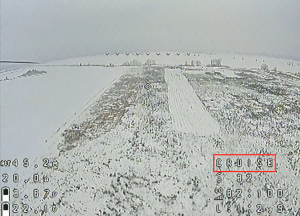
The year 2025 became a turning point in the drone war in Ukraine. Unmanned systems finally moved from the category of auxiliary tools to the status of the primary striking force on the battlefield.
According to various estimates, by the end of the year the Ukrainian military had received around 4 million drones of different types — strike drones, FPV drones, and reconnaissance UAVs. In certain sectors, they accounted for up to 90% of enemy personnel and equipment losses.
In 2025, FPV drones became a mass-produced and systematic instrument of warfare. They are used not only for precision strikes, but also for adjusting artillery fire, disrupting logistics, conducting counter-battery operations, and directly supporting infantry during assault actions.
In practice, combat operations are increasingly planned with the constant presence of drones in the air taken into account.
However, the large-scale deployment of FPV and other unmanned drones has revealed not only their effectiveness, but also a range of systemic limitations — technical, tactical, organizational, and industrial. Some of these constraints began, already in 2025, to slow further growth in the battlefield impact of drones.
Thus, while 2025 unquestionably became the year of drone dominance, a key question now arises: will they be able to maintain this role in 2026? What limitations are already affecting the use of FPV drones today, and how will the parties involved in the war attempt to overcome them?
FPV Drones as the Primary Combat Force
According to the Ministry of Defense of Ukraine and independent estimates, Ukraine planned to procure around 4.5 million FPV drones in 2025, a significant portion of which was intended for delivery to Armed Forces units for use in operations of varying scale.
Military reports confirm that more than 4 million FPV drones were supplied to the front in 2025 and were actively employed for a wide range of mission objectives. They have become one of the key strike instruments, primarily used to repel enemy assaults, eliminate assault groups, and destroy enemy equipment and support assets.
At the same time, FPV drones have become a crucial element in supporting our own combat operations — covering infantry maneuvers, striking fortified positions, disrupting the delivery of ammunition, and creating dense “dead zones” along the front line, which significantly reduces personnel losses.
FPV units operate in close coordination with infantry, artillery, and other branches of the armed forces. They are used to adjust artillery fire, detect enemy personnel and equipment, and also act as “reconnaissance-strike assets” in offensive missions.
Ukraine on the Threshold of 2026
The year 2025 marked an expansion in the use of FPV drones and a period that firmly established the war as a “drone-driven” conflict. What should be expected in 2026?
At the start of 2026, the war in Ukraine has entered a phase in which FPV drones have become one of the key tools for striking targets and supporting combat operations. However, their widespread use does not mean a full transition to a purely “drone war”. On the contrary, the experience of 2025 has shown that even with the dominance of unmanned systems, there are significant limitations that prevent drones from becoming a universal and self-sufficient means of conducting combat operations.
That is why, in 2026, both sides face a key question: why the war cannot rely solely on drones, and which technical, tactical, and organizational factors force an adaptation of the ways they are employed — from countering electronic warfare measures to changing approaches in operational planning.
Why FPV Drones Ceased to Be a “Wonder Weapon”
The development of FPV technologies is taking place on both sides of the conflict, and by 2024 the use of drones had reached a level of approximate parity. FPV drones became a mass-produced and systematic instrument of war, actively employed by both sides alike.
The novelty effect was already broken in 2023–2024, with the emergence of large-scale electronic warfare solutions, physical barriers, nets, and changes in the engineering arrangement of positions. As a result, the FPV drone has become a standard yet critical element of combat, the effectiveness of which depends on crew training, tactical integration, and the speed of technical adaptation.
Saturating the Front with Drones as a Factor of Tactical Advantage
The reality of the front in 2024–2025 showed that, in certain areas, it was precisely the level of drone saturation — both reconnaissance and strike FPV drones — that determined tactical initiative. The key factors were their survivability, resilience to electronic warfare, and the speed at which losses could be replaced.
Plans for 2026 include supplying 10 million FPV drones to the front. Saturating the front with drones will become an important factor in gaining an advantage. Key operations in 2024–2025 confirm that the side that first and systematically saturates an area with drones sets the pace of battle.
A notable example is the operation of Ukrainian forces in the Kupiansk direction, where units — including the “Skelya” battalion — achieved a significant advantage in a section of the front thanks to the number of drones. This allowed them to:
- cut off enemy logistics;
- isolate the forward line;
- disrupt enemy maneuvering.
However, further saturating the battlefield with drones does not necessarily lead to the same results, due to factors that emerge during the scaling of any process. In particular, management limitations, operator overload, and a decline in the average effectiveness of drone use — caused both by human factors and by the scaling of countermeasure tools — all play a role.
This often gives many the false impression that “quantity no longer matters”. In reality, it does matter — up to a certain point, after which the quality of managing that quantity becomes the more important factor.
2026: Not “Algorithms Instead of Scale”, but Algorithms for Scale
As we have already mentioned, there are plans to significantly increase the number of drones at the front. However, there is an important qualification: large-scale deployment requires algorithmic management.
Algorithms are not meant to replace quantity or to make every drone “smart and expensive”. The goal is different:
- to maintain effectiveness when the number of launches is high;
- to reduce the workload on operators;
- to preserve performance under electronic warfare (EW) conditions;
- to turn chaotic flights into a controlled, coordinated process.
In other words, the main narrative is shifting from “who has more” to “who has more — and uses it smarter”. The advantage goes to those who combine scale with algorithmic control, rather than simply flooding the front with drones or relying solely on more complex technologies.
The first large-scale impact of FPV drones was based on asymmetry: a cheap drone — an expensive result. Even a relatively small number of FPVs made it possible to destroy enemy equipment, positions, and logistics with an effect disproportionate to the resources invested.
It was precisely this asymmetry that, in 2023–2024, created the perception that a fundamentally new type of weapon had emerged.
Today, the key question is no longer: “How many FPVs can we launch?”
Instead, it is: “How many of them are guaranteed to hit the target in difficult conditions?”
Every sortie takes place in an environment where the enemy expects the drone, prepares for it, and has countermeasures in place. Effectiveness is now measured by the percentage of successfully completed missions within a series of deployments.
The conclusion is that FPV effectiveness in 2026 is determined by:
- performance under electronic warfare (EW) conditions;
- consistency and repeatability of results;
- integration with other strike weapons.
In 2026, FPVs remain one of the most important tools in warfare. To increase their effectiveness, it is essential to understand the limitations they currently face.
Key Limitations of FPV Drones Today
The Impact of Electronic Warfare (EW)
As in 2025, the main constraint on drone operations remains electronic warfare (EW). EW is no longer an occasional or situational factor. In 2025, it is present almost constantly — only its intensity, configuration, and effective range change.
For FPVs, this means one straightforward reality: operating in a “clean” radio environment is now the exception, not the norm.
And EW remains a critical problem, despite the active deployment of fiber-optic drones.
However, the vast majority of FPVs still rely on a radio control link. It remains the most flexible, fastest, and most scalable solution — and at the same time the most vulnerable to electronic warfare (EW).
This vulnerability becomes most acute in the final phase of the flight — when the drone enters an area of active jamming, when the distance to the target is minimal, and when there is no time left to correct an error.
What happens in the classic scenario? Video is lost. Control is lost. The attack fails. As a result, the mission as a whole is disrupted, and the real effectiveness of FPV drones declines. Each failure occurs at the very final point — the exact moment when the result was supposed to be achieved.
But EW is not merely a tactical constraint. It is not just a problem of a specific drone or a particular operator. It is a systemic limitation, rooted in the very concept of FPV systems built around a continuous communication link.
This is precisely why:
- increasing the number of drones does not solve the problem;
- boosting transmitter power has its limits;
- switching frequencies only temporarily changes the configuration of the battlefield.
The Human Factor in FPV Operations
Despite rapid technological advances, humans remain the central link in FPV systems. The operator makes decisions, adjusts the flight, and is ultimately responsible for striking the target.
By 2025, it became clear that the human factor is one of the toughest constraints on scaling FPV operations. The war is fought between drone teams, which demands a significant expenditure of pilot resources. No one can operate without making mistakes — and unfortunately, these errors occur where they are most costly: at the final point, or the “last meter” before the target.
Another challenge that became very evident with the increase in drone numbers in 2025 is that humans do not scale as quickly as UAVs. Pilots have become a scarce resource. Every operator is “worth their weight in gold”.
This is not just someone who wants to “fly a drone”. Each pilot is a highly trained specialist, difficult to replace in combat. At the same time, the pilot is a high-priority target for the enemy. No operator — no drone.
“Hunting” pilots happens on both sides, using a variety of methods and pressure points, including:
- strikes on crew positions;
- reconnaissance of control channels;
- demoralization and exhaustion.
As a result, the pilot becomes the bottleneck of the entire FPV system — and this is a significant limitation.
Equally critical is the speed of training. You cannot train an operator from scratch in a single day; it takes months of work in field conditions. Challenges with mobilization also affect the replenishment of drone crews. Training an FPV pilot requires months, not weeks. It is also important to remember that combat experience — so crucial in real operations — cannot be fully gained even with modern flight simulators. Meanwhile, operator losses on the battlefield are constant, and pilots who have been on the front lines for months need rotation.
When considering limitations, we cannot ignore human capabilities. Even with ideal training and professional-level skills, a pilot gets fatigued and loses concentration, leading to mistakes under EW conditions and enemy fire.
The effectiveness of an operator decreases during large-scale launches. This is not a matter of personal motivation or skill. It is a biological limitation that cannot be overcome through better training, selecting only the best of the best, or producing true “aces”. Pilots remain human, with inherent limits to their abilities.
The question in 2026 is no longer whether more pilots can be trained, but how to reduce the dependence of results on any single individual.
This is precisely why FPV warfare is inevitably moving from manual piloting toward algorithmic support. The goal is not to produce a few exceptional “aces”, but to achieve average — yet consistently reliable — effectiveness.
Inconsistent Results
Even the best pilots cannot deliver consistently stable results. One or a few successful FPV sorties do not guarantee repeatable effectiveness.
This became evident across many units — series of launches produce highly variable outcomes, even when performing the same tasks. And this is normal, because FPV effectiveness critically depends on hard-to-control variables: the individual pilot, their experience and condition, weather, terrain features, and visual conditions. Even a slight change in just one of these factors can alter the outcome.
Guidance Systems as the Key to Consistency
Here we see a fundamental shift compared to the period before 2025 — guidance systems that work both day and night have become the foundation for reliable target strikes.
Their role is to:
- reduce dependence on the skill of any single pilot;
- compensate for poor visual conditions;
- provide corrections during the final phase of the flight;
- even out results across different crews.
The drone no longer needs to be “manually guided” to the target — the system handles this task.
This fundamentally changes planning capabilities:
- effectiveness can now be calculated;
- reliance on “aces” is reduced;
- scenarios and planning take precedence over improvisation.
FPV Drone Vulnerability to Camouflage and Deception
On the battlefield, “old-school” measures like nets, decoys, smoke, and simple engineering solutions are widely used — and they work. They can disrupt FPV attacks, make operators doubt their targets, and force ammunition to be spent on false objects.
These measures don’t require advanced technology, but they exploit human perception rather than electronics. Once again, this highlights a key problem for manually guided drones: these FPVs critically depend on what the pilot sees and how they interpret that information.
Camouflage can break the visual image of a target, hiding equipment outlines. The pilot may end up attacking a decoy or an empty spot. For the defending side, this means minimal cost for maximum attrition effect. A notable example is the roads around Kharkiv, which are now systematically covered with nets.
Limited Scalability of FPV Drones
One crew operates one drone. This creates a constant personnel shortage, limits the pace of attacks, and makes effectiveness dependent on the physical presence of operators.
At the same time, coordinated attacks with multiple FPV drones remain difficult to execute because there is no shared navigation system, and signal delays occur. Synchronizing operators’ actions is challenging. As a result, most attacks are carried out by single drones.
When FPVs are deployed en masse, command and coordination channels become overloaded, creating difficulties in synchronizing the actions of drone units, infantry, and artillery. Decision-making takes longer, and errors increase due to “information noise”.
It is also important to consider the limits of communication bandwidth. Even without active jamming, the radio spectrum becomes congested, directly reducing drone effectiveness.
How These Limitations Will Be Addressed in 2026
Many of these limitations pose a real challenge for Ukraine. However, they are not insurmountable. Let’s examine step by step the measures that can help overcome these constraints or eliminate them in the near future.
Autonomizing the Final Phase
One of the key directions for 2026 is not full FPV autonomy, but autonomy in the critical moment — the final phase of the attack. This is precisely where EW is most aggressive and human errors are most likely, so the drone must remain effective even if the connection is lost.
Experience from 2024–2025 shows that, despite the development of fiber-optic solutions, they are still insufficient for full-scale coverage of the front. As a result, classic radio-controlled FPVs remain the most widely used tool — and therefore the most vulnerable to EW, especially during the final stretch of the mission.
The response to this is autonomizing mission completion. By 2026, solutions that allow FPVs to:
- automatically track a selected target after acquisition;
- adjust their trajectory without constant operator input;
- complete the attack even with full or partial loss of control;
- operate reliably day and night, under challenging visual conditions
are gradually becoming standard.
This shifts the operator’s responsibility from “manual guidance” to choosing the timing, scenario, and target.
Reducing the Role of Manual Piloting
The mass deployment of FPVs has revealed a clear limitation: the number of drones can increase exponentially, while pilot training remains slow, uneven, and dependent on individual schools, instructors, and the combat experience of specific units.
In 2026, the operator’s role is shifting toward that of a tactical manager who:
- selects the target and timing of the attack;
- defines the deployment scenario;
- oversees a group of drones rather than controlling every movement of each individual aircraft.
By automating key stages of flight and guidance, it becomes possible to lower the entry barrier for new pilots — a critical advantage in mobilization — and to even out the average effectiveness of units. This reduces the likelihood of fatal mistakes during the final phase of an attack and shortens training time without compromising quality. The main goal is to ensure that the technology can compensate for human limitations and no longer requires superhuman skills from the operator.
Result Stability
In 2026, the key value is no longer a record-breaking strike or a single “perfect” sortie, but a predictable probability of target engagement under real combat conditions. What matters to a commander is not whether an FPV can hit a target, but how likely it is to do so again and again.
FPV drones are gradually losing their improvisational character and shifting toward algorithm-defined operational scenarios. Their logic of use is becoming closer to that of guided munitions, rather than experimental platforms tested in the field.
Stability does not mean uniformity. It means the result is no longer a lottery. The FPV becomes a planning tool, not merely an opportunity to “catch the right moment”.
It is precisely guidance algorithms that make it possible to achieve results regardless of the specific pilot, weather conditions, terrain, or visual obstacles.
Countering Camouflage Through Algorithms and Saturation
In 2026, the focus of countering camouflage shifts beyond simply achieving “better vision” to combining algorithms with mass deployment. Old-school visual deception — nets, decoys, smoke — remains effective. However, attention is moving away from the image itself toward the behavior of the object and the logic of its presence. Here again, guidance algorithms play a key role: they rely not only on shape, but on movement data, routes, and contextual patterns.
The decision is increasingly made by the system, not solely by the human eye.
The key factor is the saturation of a specific sector of the front with drones. Once FPVs become truly mass-deployed, the need to “guess” where the real target is disappears. Not only equipment is struck, but also logistics routes, access roads, crossings, infrastructure hubs, and communication and energy nodes.
In effect, more drones are targeting not the equipment itself, but the conditions that allow it to exist. In such a model, a decoy or a net may protect a single asset, but it does not protect the supply system as a whole.
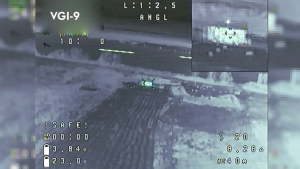
Another clear trend is the increasing strike range of FPVs. The advantage goes to the side that controls the space. And here it is crucial that the maximum possible number of drones at the front be equipped with the modern VGI-9 system, which helps minimize false engagements and increase effectiveness in overcoming operational constraints. The plan for 2026 is to equip 100% of FPVs with updated firmware.
Transition to Group Scenarios Without “Swarms”
In 2026, FPVs are increasingly deployed not as isolated platforms, but as coordinated tools at the level of an entire sector of the front. This is not about fully autonomous swarms, but about the real concentration of people and drones at the right place and the right time. Both sides are moving in this direction.
To understand how coordinated drone operations could redefine modern warfare, read “The Rise of Drone Swarms: the Future of Warfare.”
Single sorties are becoming rare. More often, FPVs operate in series and waves, with attacks synchronized in time and direction. At the same time, algorithms do not replace humans — they reduce the burden on operators and simplify control, allowing pilots to work more effectively.
In practice, scaling FPV operations in 2026 will depend on improving pilot organization and increasing the speed at which trained teams can be redeployed. Algorithms enhance human capabilities rather than attempting to replace them.
FPV as Part of a Unified System: FPV + Unmanned Ground Vehicles (UGVs)
In the first years of the war, drones fundamentally transformed the role and significance of artillery. Today, they are increasingly used in combination with unmanned ground vehicles (UGVs).
This combination is shaping a new tactical reality. FPVs are more and more often integrated:
- with artillery, as an element of long-range strike capability;
- with unmanned ground vehicles — both strike and logistics platforms;
- into a single “detect – confirm – strike” cycle, where decisions are made based on data rather than video alone.
In 2026, the FPV + UGV pairing becomes a core element of tactical operations. The number of ground platforms at the front is increasing, and their roles are expanding — from ammunition carriers to mobile FPV launch points and signal relays.
Integrating drones with UGVs significantly broadens the capabilities of these systems. Strike range increases without direct contact, the ability to operate from cover and ambush positions improves, and risks to operators and infantry are reduced to a minimum.
By the end of 2026, we can expect hundreds of cases where enemy targets are engaged by integrated UGV–FPV systems rather than by a single drone or a standalone ground robot. Already today, ambush scenarios using UGVs with remote FPV launch are being employed, along with strike operations in which a ground robot delivers FPVs deep into defensive lines.
FPVs are no longer just drones that need to “reach the target and hit it”. They are becoming a critical component of a broader system.
In 2026, drone warfare definitively evolves into systems warfare — where effectiveness is determined by the quality of unmanned systems integration.
Conclusion: What Will Really Decide the Future of FPVs
The year 2026 will not mark the end of FPV drones, nor will it turn warfare into a fully autonomous endeavor. Instead, it will be the year when the decisive factor is not merely the presence of drones, but the ability to systematically overcome their limitations.
Electronic warfare, the human factor, inconsistent results, and scalability challenges can no longer be offset by operator heroism or sheer numbers alone. The advantage will go to those who can combine quantity with algorithmic control, autonomy in the final phase, standardized outcomes, and the integration of FPVs into a unified combat system alongside artillery and UGVs.
In 2026, FPVs are not a “miracle weapon”, but they remain a critically important tool — provided they operate as part of a managed system rather than as a collection of isolated sorties.