


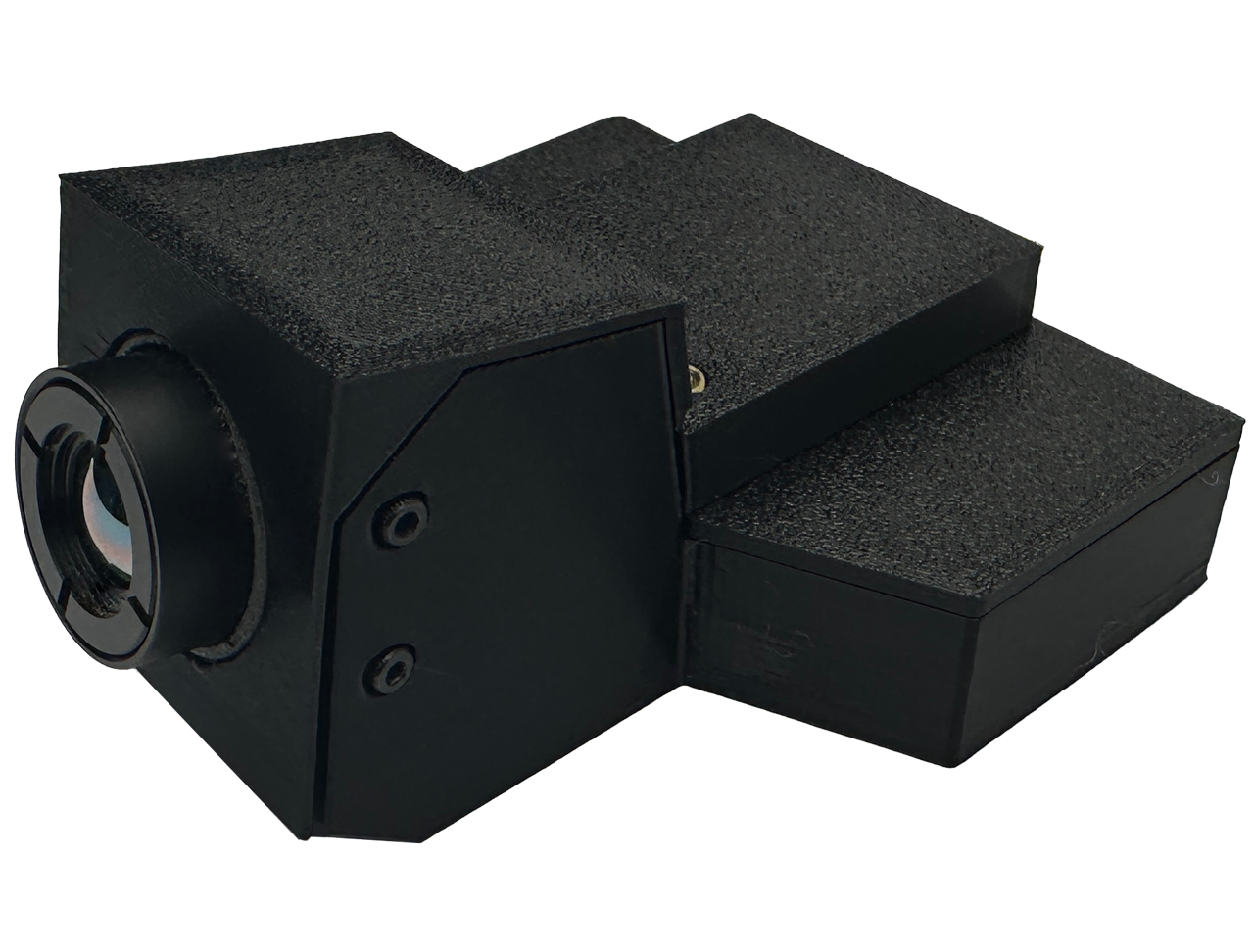
Night module
The system does not require calibration or configuration – algorithms automatically adapt to load, wind, and flight conditions.
Key benefits

Captivation

Cruise

Compatibility
The VGI-9 guidance module is compatible with the main types of FPV drones – 7“, 8”, 10“, 13”, and 15" – without being tied to a specific platform. For drone manufacturers, the module can be integrated into their own models via the contact form on the website for further technical cooperation.

Vision

Autonomy
After capturing the target, the VGI-9 night module operates autonomously, providing stable tracking without constant operator control. The system compensates for wind effects and changes in drone weight, maintaining high targeting accuracy for both static and moving targets.
Experience
The VGI-9 night module is used in real combat conditions, where the system undergoes stress and electronic warfare exposure. The solution architecture and guidance algorithms are optimized based on combat experience and feedback from unit operators.
Specifications
| Parameters | Meaning |
|---|---|
| Maximum effective target acquisition distance | Up to 3000 meters |
| Maximum effective target acquisition height | Up to 1000 meters |
| Types of goals | Moving and stationary ground targets |
| Maximum speed of a moving target | Up to 80 km/h |
| Cruise control support | Yes |
| Resistance to electronic warfare | Yes |
| Target acquisition type | Target detection type |
| Ability to capture a target from hovering | Yes |
| Damage to concealed targets | Yes |
| Automatic target tracking | Yes |
| Adapting to changes in equipment weight | Yes |
| Automatic wind compensation | Yes |
| Stable frame rate (FPS) | 30 FPS |
| Accuracy of damage | Up to 0.5 m, depending on weather conditions, height, and capture distance |
| Adapting to changes in target behavior | Yes, automatic mode switching |
| Protection against copying and decompiling software | High level: encryption, copy protection, obfuscation |
Combat tasks performed by VGI-9
Countering electronic warfare
The guidance system allows striking static and moving targets at speeds of up to 80 km/h, even in areas affected by enemy electronic warfare measures.
Weather conditions
The thermal imaging camera of the guidance module ensures stable operation in foggy conditions and limited visibility due to the thermal signature of the target.
FPV preservation
The system allows the drone to continue flying along a predetermined trajectory in the event of loss of communication with the operator during a mission until communication is restored.
Precise damage
Mission distance
Cruise control mode reduces battery consumption during flight, increasing mission duration and range during flight.
Ease of operation
The drone with the guidance module does not require additional settings and can be quickly mastered by the operator directly in the field.
Cruise control mode
Cruise control mode enables autonomous flight of the FPV drone in a specified direction with automatic speed, altitude, and course maintenance, compensating for the effects of wind and external factors.