Russian drone attacks have forced Ukraine to look for new ways to protect its skies. Until recently, air defense had been the exclusive responsibility of military units, but now civilian organizations are becoming increasingly involved in the process as well.
This is how Ukraine’s experimental private air defense project emerged — a system under which companies can form their own air defense units to protect both their facilities and entire regions from drone and missile attacks.
Today, private air defense is no longer just a concept. The first companies have already received permits, are undergoing certification, training personnel, and have confirmed cases of shooting down enemy targets. But what exactly is private air defense in practice — a unit created by a company to protect its own facilities, or a new type of commercial service where one company shoots down drones for others in exchange for payment? And where is the line between such a service and a private military company? Let’s take a closer look.
What Is Private Air Defense — and Why Was It Introduced?
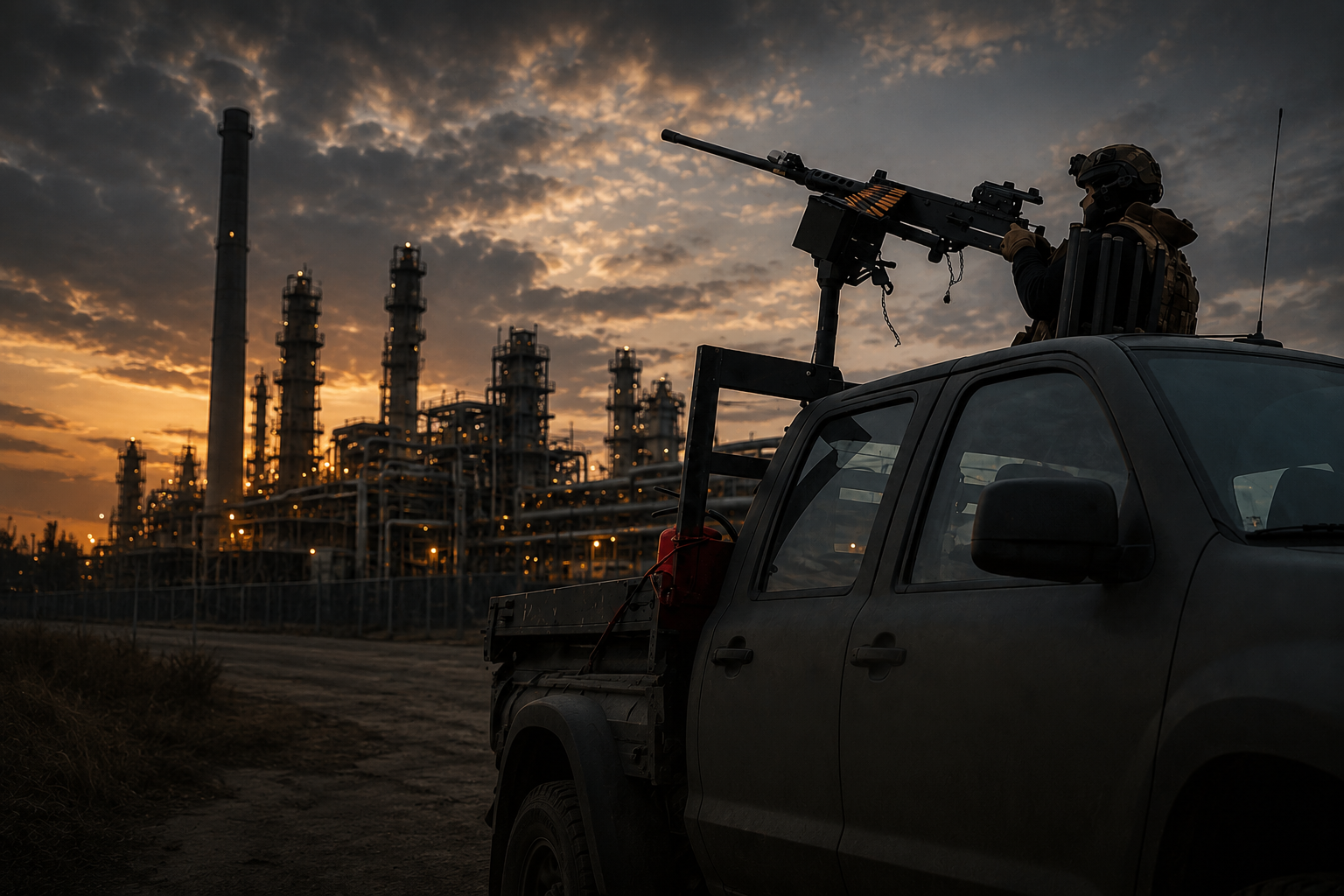
Private air defense is not a separate contractor company, but rather a unit formed directly by a business using its own resources. In other words, a company recruits people from among its staff (or hires new personnel), trains them according to an established procedure, obtains certification, and then this unit protects the facility while operating under the operational command of the Air Force’s Air Command.
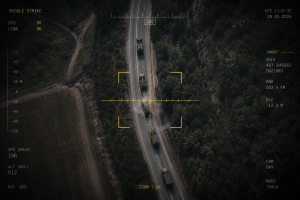
To carry out their work, such units may use interceptor drones, electronic warfare systems, automated turrets, surveillance systems, and other equipment approved by military command authorities.
In practice, however, an entirely new service market is already beginning to emerge around this experimental private air defense project. Some businesses are considering not only creating their own protection units, but also using the services of specialized companies that could provide air-defense coverage for infrastructure facilities against aerial attacks.
Private air defense has become a logical continuation of the development of so-called “small-scale air defense” — a multi-layered airspace protection system that already includes, among others, air defense groups operating within volunteer territorial community formations.
The need for this new format arose because of the constant Russian drone attacks on civilian and industrial infrastructure. Businesses across different regions of Ukraine have become near-daily targets for enemy Shahed drones, while the number of facilities requiring protection continues to grow.
Russia’s drone campaign did not emerge overnight—learn how the Shahed program evolved in our analysis, “The Evolution of Shaheds: How Russia Scaled Its Drone Warfare.”
The military is physically unable to provide simultaneous coverage for every critical and industrial infrastructure site. That is why companies were allowed to form their own air defense groups, which help protect facilities from drone attacks in coordination with the Air Force.
The first step in this direction came with the Online R&D project in 2024, when developers of interceptor drones were offered rewards of up to $20,000 for every enemy Shahed drone successfully shot down.
At the same time, another track was developing: in November 2025, the Cabinet of Ministers of Ukraine, at the initiative of the Ministry of Defense, approved the procedures governing the creation and operation of private air defense groups.
In March 2026, amendments were introduced to the project’s operating framework. Under the updated rules, military units may now temporarily transfer air defense equipment and ammunition to businesses — subject to an individual decision by the Command of the Ukrainian Air Force for each specific request.
The following areas were also improved:
- procedures for training and certifying the groups;
- rules for the accounting and storage of weapons;
- mechanisms for the use of ammunition;
- coordination between private air defense groups and the Air Force.
Why Ukraine Needs Private Air Defense
According to Minister of Defense Mykhailo Fedorov, the broader goal is to identify 100% of aerial threats in real time and intercept at least 95% of missiles and drones. A protected sky is not only about people’s safety — it is also essential for keeping the economy functioning steadily.
At the same time, private air defense is not seen as a replacement for traditional air defense systems. Rather, it is intended to serve as an additional, or “lower-tier,” layer of protection primarily focused on intercepting kamikaze drones.
Can robots eventually take over frontline missions? Find out in our analysis, “When Will Ground Robotic Systems Replace Humans on the Battlefield?”
Private air defense performs several important functions at once:
- strengthening Ukraine’s multi-layered airspace protection system, especially in regions with a high concentration of industrial enterprises;
- reducing the burden on the main air defense forces of Ukraine’s Defense Forces, allowing the military to focus resources on priority areas;
- for businesses themselves, it provides a way to protect employees’ lives, safeguard production facilities, reduce the risk of operational shutdowns, and minimize economic losses for the country.
Who Has Already Joined the Private Air Defense Initiative
As of April 2026, 24 companies had already received authorization to carry out air defense tasks. The project includes businesses of various ownership types from Kharkiv, Odesa, Kyiv, Poltava, Zakarpattia, and other regions of Ukraine.
It should be noted that very few details are publicly available about how most companies actually plan to implement private air defense. Some businesses avoid commenting for security reasons, since information related to the protection of critical infrastructure during wartime is subject to restricted access.
For example, Kyivstar stated that it supports government initiatives aimed at strengthening business protection, but does not disclose details regarding its security measures or any possible use of air defense systems.
As we previously reported, alongside the model in which companies independently create protection units for their own facilities, a separate private air defense services market is also beginning to emerge in Ukraine.
Among the first companies to publicly announce work in this area are Carmine Sky, Guardia, and SHERIFF.
In particular, Carmine Sky positions itself as a defense company focused on technological solutions aimed at strengthening Ukraine’s defense capabilities, including drones, electronic warfare systems, and private air defense development services.
Guardia, founded in 2025, received authorization from the Ministry of Defense in February 2026. The company tested artillery and laser systems and announced agreements to provide protection for facilities belonging to Nova Poshta and Kyivvodokanal.
“We hold the appropriate license from the Ministry of Internal Affairs to conduct security operations, have received an order from the Ministry of Defense, and obtained authorization to carry out air defense measures for critical infrastructure facilities. Going forward, we are cooperating with major businesses that operate large terminal facilities,” said the company’s director, Valerii Kocherha.
The topic of private air defense has also previously appeared in public statements by representatives of Nova Poshta. The company’s co-founder, Volodymyr Popereshniuk, stated that it would be more practical for businesses not to create their own units, but instead to use the services of specialized companies on an outsourcing basis. At the same time, the company has not officially announced participation in the experimental project.
Nova Poshta has particular motivation to pursue such protection measures, as since the beginning of 2026 alone, the company’s infrastructure has been hit by several targeted enemy strikes. On April 1, a Shahed drone attack destroyed the company’s terminal in Lutsk.
More recently, the SHERIFF holding also entered the private air defense market. The company believes that private air defense can become a service not only for large corporations, but also for medium-sized businesses that are unable to independently build their own protection systems.
At the same time, not all businesses are rushing to join the initiative. Maksym Shkyl, founder of Avtostrada and the MS Capital group, whose company operates at 30 energy infrastructure sites, spoke bluntly:
“It is physically impossible to protect all facilities, production sites, and bases — it is simply too expensive a project.”
Who Serves in Private Air Defense Units
Private air defense groups are not military units, but civilian employees of companies who have completed training, received certification and security clearance, and meet the required safety standards.
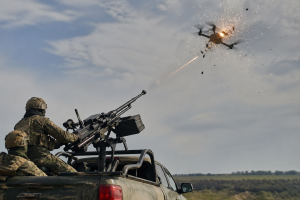
The training is far from a formality. At training centers, participants practice real-life scenarios. For example, gunners train on the large-caliber Browning machine gun using VR simulations of Shahed drone attacks on infrastructure facilities. Interceptor-drone pilots use simulators to rehearse interception maneuvers against different types of targets, with the full physics of flight accurately replicated.
With approval from the Air Command of the Ukrainian Air Force, these groups are granted the right to use designated air defense systems within a specific area and during a defined time period in order to protect against aerial attacks.
Most often, such groups include former military personnel, parents of large families, women, company employees who are exempt from mobilization under Ukrainian law, as well as members of militarized security units if such units exist within the company.
Participation in private air defense does not provide exemption status from mobilization, since these employees are already not subject to conscription into Ukraine’s Defense Forces.
How Much Does Private Air Defense Cost?
Building independent protection against aerial attacks is an expensive undertaking even for large businesses.
According to Carmine Sky, the initial investment required to deploy a private air defense system starts at around 20 million hryvnias. This amount includes:
- purchasing equipment;
- building the necessary infrastructure;
- setting up defensive positions;
- paying operators and technical specialists;
- maintaining the systems.
“Protection costs around 10% of the value of the facility. It pays for itself after the very first interception,” says the director of Guardia.
He also adds that after the first successful interception, such investments can fully pay off if they prevent the destruction of critical infrastructure.
Precisely because of these high costs, not all companies are prepared to invest in private air defense — especially businesses that operate a large number of facilities across different regions.
What Weapons and Equipment Can Companies Use?
Companies independently build their air defense capabilities by purchasing the necessary systems at their own expense.
After receiving approval from the Command of the Ukrainian Air Force, businesses may acquire interceptor drones, electronic warfare (EW) systems, air target detection and monitoring systems, specially equipped vehicles, automated machine-gun turrets, and other tools required to carry out air defense tasks.
For example, Carmine Sky uses Sky Sentinel turrets equipped with Browning M2 machine guns, while also gradually introducing interceptor drones based on the company’s own technical solutions.
In addition, companies may receive weapons and equipment from the Armed Forces of Ukraine for temporary use. This refers to systems currently stored at military depots and not being used in active combat operations. Such transfers are carried out exclusively by decision of the Air Force Command.
All types of weapons and equipment must be approved by the military in order to avoid conflicts with the broader air defense system and to ensure technical compatibility.
Who Oversees Private Air Defense Operations?
Private air defense does not operate independently — all of its activities are coordinated by the Air Command of the Ukrainian Air Force within the relevant area of responsibility.
It is the military that determines the operational sector of each group, its personnel, the list of required weapons, and the specific aerial targets assigned to it, all within the unit’s combat capabilities.
“We only complement the traditional air defense model. State air defense plays a more strategic role, while we handle the local level. We do not make decisions independently — we work in coordination with the Ministry of Defense. They alone assign targets and authorize the use of fire; we cannot do that on our own. We are building a layered system, like the layers of an onion,” explained Ruslan, a representative of Carmine Sky.
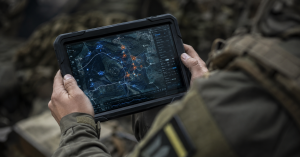
Companies are also connected to the Skymap situational awareness system, which allows them to receive real-time information about aerial targets and operate in coordination with local tactical air defense groups.
How Effective Is Private Air Defense?
Although the project has been operating for only a few months, its participants are already reporting their first combat results.
In the Kharkiv region, one of the companies involved in the private air defense project has already intercepted Shahed drones as well as Zala reconnaissance drones.
Work footage: https://t.me/zedigital/6690
Later, the Ministry of Defense also announced the first successful interception of a jet-powered Shahed drone traveling at speeds exceeding 400 km/h.
Video of the shootdown: https://www.facebook.com/share/v/1BDNfJLQcx/
The Ministry of Defense describes this as an important element in building a multi-layered air defense system. Russia is constantly upgrading its drones, making them faster and more difficult to intercept.
How Companies Can Join Private Air Defense
Participation in Ukraine’s private air defense project is open to companies of different ownership types from any region of the country. However, to take part, a business must meet a number of requirements set by the Ministry of Defense and the government.
The main criteria include:
- having licenses or permits for relevant activities, such as security services or the use of special equipment;
- or being listed in the register of state contract performers;
- no sanctions imposed on the company;
- no links to the aggressor state among owners, beneficiaries, or management;
- no business operations in the territory of the aggressor state;
- sufficient technical and personnel capacity to perform air defense tasks.
Additional requirements also apply to company leadership. These include no criminal record, compliance with age requirements, legal capacity, and no medical conditions that could prevent work in the field of air defense.
Personnel also undergo security checks and receive the necessary clearances.
Challenges Facing Private Air Defense
Despite its rapid development, private air defense remains a complex and controversial issue.
The main challenge is the state’s monopoly on the use of force. The question of who has the right to possess weapons, operate combat drones, and conduct surveillance remains one of the most debated topics.
Analyst Oleksii Yizhak of the National Institute for Strategic Studies emphasizes that the movement toward private air defense is a logical step, especially for the defense industry and critical infrastructure, which should have the ability to protect themselves.
At the same time, he stresses the need for strict control. If such practices become too widespread, there is a risk of uncontrolled proliferation of weapons and combat technologies among private businesses.
This issue becomes especially sensitive after the end of the war, when the country may face a large number of weapons in civilian hands and the need for clear regulation of their use.
And this leads to a natural question: could private air defense — especially in a model where one company shoots down drones for others for payment — be the first step toward legalizing private military companies in Ukraine?
Prospects for Private Air Defense
The emergence of private air defense marks another step in the broader transformation of warfare driven by drones, automation, and distributed security networks.
For Ukraine, the initiative is less about replacing traditional air defense than expanding it. Interceptor drones, automated turrets, electronic warfare systems, and private operators are becoming additional layers within a growing multi-tiered defense architecture.
As Russian aerial attacks continue and drone technologies evolve, the effectiveness of this model will be closely watched by governments, defense companies, and critical infrastructure operators around the world. The results could influence how nations approach airspace protection far beyond Ukraine’s borders.