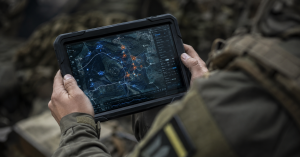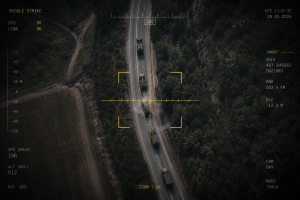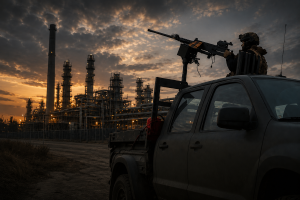
Before the start of the full-scale war in Ukraine, the American company Palantir Technologies was known mainly to military professionals and a small circle of specialists. Today, however, it is regarded as one of the companies that has transformed modern warfare, as its software helps the Ukrainian military analyze vast amounts of information, make decisions faster, and plan operations.
What Palantir Does
Palantir is an American company that develops software for large-scale data analysis using artificial intelligence and for supporting decision-making. Its key strength is not in producing weapons or drones, but in dramatically speeding up the analysis of massive amounts of information and helping identify connections between data that would be extremely difficult and time-consuming to detect manually.
The company’s software can combine data from hundreds of different sources within seconds, including satellite imagery, intelligence reports, drone footage, maps, logistics systems, open sources, intelligence communications, and even information from social media. This speed and ability to integrate multiple sources are exactly what make manual analysis far less effective than the platform’s capabilities.
After analyzing the data, the system identifies connections between events, predicts possible scenarios, and helps people make informed decisions.
The company itself emphasizes that its products do not replace human decision-makers but instead help them work more effectively by using the capabilities of artificial intelligence and advanced analytics.
For this reason, the company works not only with the military. Its software is also used by banks, healthcare institutions, manufacturing companies, logistics providers, as well as intelligence agencies, law enforcement authorities, and governments in various countries.

How the Company Was Founded
Palantir Technologies was founded in 2003 as an attempt to provide a technological solution to one of the key questions the United States faced after the September 11, 2001 terrorist attacks: why had intelligence agencies failed to connect separate pieces of information in time to prevent the attacks?
This question became the starting point for PayPal co-founder and well-known venture investor Peter Thiel. Together with Alex Karp, Joe Lonsdale, Stephen Cohen, and Nathan Gettings, he founded Palantir Technologies.
The founders decided to adapt the technologies that PayPal had used to detect financial fraud to a completely different field—preventing terrorist attacks.
The idea was relatively simple but ambitious: to create a platform capable of analyzing vast amounts of information, identifying hidden patterns, and detecting potential threats before they become reality.
At the same time, the founders stated that the system should not only assist intelligence agencies but also strictly limit unauthorized access to personal data. This balance between security and privacy became one of the company’s core principles, although it later became the subject of its greatest controversies.
Why the Company Is Called Palantir
The company’s name comes from the fictional world created by J. R. R. Tolkien.
In The Lord of the Rings, the palantíri are magical seeing stones that allow their users to observe events over great distances, see what is happening in other places, or even look into the past.
This idea became the foundation of the company: to give people the ability to “see” patterns hidden within vast amounts of information.
What Exactly Does Palantir Do?
Palantir’s main product is not a single software application but an entire ecosystem of data platforms.
Its software performs several key functions:
- collects information from hundreds or even thousands of different sources;
- cleans and integrates data into a single system;
- identifies hidden connections between people, events, or objects;
- visualizes information on interactive maps and diagrams;
- uses artificial intelligence to predict possible scenarios;
- helps decision-makers make informed decisions based on up-to-date information.
The company describes its mission as developing software that helps people solve some of the world’s most complex problems—from combating terrorism to managing manufacturing processes or responding to natural disasters.
Unlike many AI companies, Palantir does not seek to fully automate decision-making. Instead, its approach is that the final decision should always remain with a human, while artificial intelligence serves as a tool to help analyze situations more quickly.
The Company’s Main Platforms
Over more than twenty years, Palantir has developed several software platforms, each designed for different areas of use.
Gotham
This is the company’s best-known product. It is used by the military, intelligence agencies, and law enforcement organizations. Gotham helps users:
- analyze the battlefield;
- track enemy movements;
- integrate satellite imagery and drone data;
- plan military operations;
- identify hidden connections between events.
This platform has become the foundation for many of the military solutions used today by the United States and its allies.
Foundry
While Gotham was developed for government agencies, Foundry is designed for businesses. The platform is used by major industrial companies, banks, manufacturers, energy companies, and hospitals. It helps organizations forecast demand, optimize production, manage logistics, analyze financial risks, and automate business processes.
Apollo
Apollo is responsible for deploying and updating all of Palantir’s other platforms. It can be described as the company’s “operating system.” It enables software to be deployed quickly across cloud services, on local servers, or even directly in combat zones where there is no reliable internet access.
Artificial Intelligence Platform (AIP)
In 2023, the company also introduced its Artificial Intelligence Platform (AIP), which combines large language models with specialized enterprise data. This enables organizations to use generative artificial intelligence to analyze information and support decision-making.
Why Palantir Is Considered One of the World’s Most Controversial Tech Companies
Despite being one of the leaders in big data analytics and artificial intelligence, Palantir has remained at the center of intense debate for more than two decades. The reason lies not so much in its technology itself, but in who uses it.
From the very beginning, Palantir built its business around working with governments, intelligence agencies, militaries, and law enforcement organizations. Its clients include the U.S. Central Intelligence Agency (CIA), the U.S. Department of Defense, the Federal Bureau of Investigation (FBI), the U.S. Department of Homeland Security, as well as military and government organizations in other countries.
For this reason, critics argue that Palantir’s technology can be used for excessive surveillance and may infringe on individuals’ right to privacy.
Immigration Enforcement
The company faced some of its strongest criticism over its cooperation with the U.S. Immigration and Customs Enforcement (ICE). Palantir’s software was used to analyze large volumes of data on migrants and to support operations involving the detention and deportation of undocumented immigrants.
Human rights organizations accused the company of enabling the strict immigration policies of Donald Trump’s administration through its technology. Palantir, however, maintained that it only provides the software, while decisions about how it is used are made by government authorities.
Predictive Policing
Another source of controversy was Palantir’s involvement in so-called predictive policing programs. Its software was used by the police departments of Los Angeles and New Orleans to analyze crime data and identify areas or individuals considered to be at a higher risk of involvement in criminal activity.
Human rights advocates warned that such algorithms could reinforce existing biases within the criminal justice system and lead to discrimination against certain groups of people.
Personal Data During the COVID-19 Pandemic
During the COVID-19 pandemic, Palantir helped the governments of the United States, the United Kingdom, and other countries analyze large volumes of healthcare data and coordinate efforts to combat the spread of the coronavirus. However, civil society organizations also expressed concerns about the potential overuse of personal medical data and the risks of government surveillance.
Political Views
The political views of the company’s leadership are also widely discussed. Palantir co-founder Peter Thiel is known as a conservative investor and a supporter of Donald Trump, while CEO Alex Karp has repeatedly described himself as holding left-leaning political views. Despite these ideological differences, both consistently support the idea that Western democracies must maintain a technological advantage over their rivals.
The company itself emphasizes that it does not create weapons and does not make decisions on behalf of people. Palantir states that its platforms only help analyze information more quickly and support more informed decision-making, while responsibility for how the technology is used lies with its customers.
How and Why Palantir Helps Ukraine
Cooperation between Ukraine and Palantir began almost immediately after the start of Russia’s full-scale invasion. By May 2022, the company had already opened a Ukrainian office, and less than four months after the beginning of the full-scale war, CEO Alex Karp personally visited Kyiv. He became one of the first leaders of a major Western technology company to visit Ukraine during the war.

During the visit, the two sides agreed to adapt the company’s software to meet the needs of the Ukrainian military and government agencies. Palantir engineers worked alongside Ukrainian specialists, developing solutions for frontline needs in real time.
One of the reasons why the company has actively supported Ukraine is its corporate philosophy. Palantir openly states that its mission is to provide democratic countries and their allies with a technological advantage.
Another reason is that the war in Ukraine has become the most digital war in history. Every day, the military receives enormous amounts of information, including satellite imagery, drone footage, radar data, thermal imaging, intelligence reports, sensor data, and information from open sources. As a result, Ukraine has become a testing ground for cutting-edge defense technologies and one of the company’s key partners.
VGI-9 CTO on Revolutionizing Drone Targeting in Combat, read here.
The company has provided Ukraine with several of its own products, including Palantir Edge AI and MetaConstellation.
Palantir Edge AI is a versatile artificial intelligence platform that can integrate data from multiple sources, analyze it, and automatically identify important patterns. One of its key functions is creating a unified picture of the battlefield. Its algorithms collect information from satellites, drones, sensors, and other systems, then display it on an interactive map. While analyzing dozens or even hundreds of satellite images could previously take days or even weeks, artificial intelligence can now complete the same task in a matter of minutes.
MetaConstellation is responsible for integrating data from a large number of commercial satellites. The system can combine optical imagery, thermal maps, radar images, and other types of data, helping the military track the movements of Russian troops, equipment, and logistics in near real time.
According to company representatives, Palantir does not provide Ukraine with satellite data itself—it provides the tools to analyze that data.
Documenting War Crimes
In addition to its military applications, the software also helps document Russian war crimes. The system can automatically cross-reference vast amounts of photos, videos, geolocation data, and other evidence, significantly speeding up the work of investigators and international war crimes investigators.
Palantir Expands Its Presence
In 2023, Ukraine’s Ministry of Digital Transformation announced that various Ukrainian institutions—from law enforcement agencies to the military command—were testing Palantir’s technologies. It also became known that the company was operating in Ukraine free of charge, with its work funded by partners rather than the Ukrainian government.
Long-Range Strikes
Over the following years, the partnership continued to deepen. In May 2026, Mykhailo Fedorov, Ukraine’s Minister of Defense, announced that together with Palantir, Ukraine had developed a system for detailed analysis of Russian aerial attacks, implemented AI solutions for processing large volumes of intelligence data, and integrated the company’s technologies into the planning of long-range strikes against the enemy’s military targets.
Brave1 Dataroom
Another important area of cooperation is Brave1 Dataroom, a platform developed jointly by Palantir and Ukraine for Ukrainian defense technology companies. It provides verified developers with access to real, anonymized battlefield data, enabling them to train artificial intelligence models for detecting and intercepting aerial targets. According to Mykhailo Fedorov, more than one hundred Ukrainian companies are now training dozens of AI models that help identify drones, predict their flight paths, and improve the effectiveness of Ukraine’s air defense.
In practice, the partnership between Ukraine and Palantir has become one of the world’s largest examples of the use of artificial intelligence in modern warfare. While the company initially focused on integrating satellite data and analyzing the battlefield, its technologies are now used to analyze aerial threats, process intelligence data, train military AI models, plan operations, and support the development of Ukraine’s defense technology ecosystem.
Notably, the partnership extends beyond the war itself. Ukrainian officials have repeatedly stated that after the end of hostilities, Palantir’s technologies could also be used for demining, restoring critical infrastructure, combating corruption, and analyzing data to support the country’s post-war reconstruction.
Are There Any Risks? Questions That Remain Unanswered
Despite Ukraine’s close cooperation with Palantir, public discussions occasionally arise about how this partnership is structured and whether it may involve potential risks.
The issue was raised most prominently by Valerii Markus, a serviceman and former Chief Sergeant of the 47th Separate Mechanized Brigade “Magura”. Following the Ministry of Defense’s announcements about expanding cooperation with Palantir, he questioned what Ukraine is actually receiving in exchange for granting the company access to the unique data generated by a modern war.
In his view, Ukraine’s most valuable strategic asset today is the vast amount of data accumulated over the course of the full-scale war.
“Ukraine has something no other country in the world has: data gathered in the conditions of a real war. Not training grounds. Not simulations. Not PowerPoint headquarters scenarios. But a real war, real targets, actual strike results, drone telemetry, satellite imagery linked to combat operations. Data on the effectiveness of decisions, weapons, tactics, and technologies under real battlefield conditions,” he wrote.
According to Markus, this data could become the foundation for future military technologies, artificial intelligence systems, and new types of weapons. For this reason, he called for maximum transparency regarding the terms of Ukraine’s cooperation with the American company.
Markus also emphasized that no publicly available information exists about the terms of the contract between Ukraine and Palantir, the parties’ rights regarding the use of data, or the assessed value of such a partnership.
“Is the contract, including the rights and obligations of both parties, publicly available? Has there been an audit of what it costs? Are there guarantees that Ukraine is not giving away a strategic asset for next to nothing? Because right now, I see a troubling picture: we are paying in blood for data that someone else may turn into market value, international influence, and enormous profits,” Markus concluded.
The questions raised by Markus are not unique to Ukraine. Similar debates are taking place in other countries that cooperate with Palantir.
The Main Risks Highlighted by Experts
- Control over military data — it remains unclear how much access the company has to military data and what rights it has regarding its future use.
- Training artificial intelligence models — Ukraine’s battlefield data is unprecedented on a global scale and could be used to improve the company’s AI algorithms.
- Dependence on a private American corporation — if critical military processes become integrated into the software of a single provider, it raises concerns about long-term technological dependence.
- Lack of transparency regarding the terms of cooperation — because of the military nature of the projects, most details remain classified, giving rise to speculation and public debate.
At the same time, many Ukrainian military experts and members of the technology community consider these concerns to be premature.
Anton Pavlushko, an OSINT analyst with the international intelligence community InformNapalm, responded to Markus’s statement by arguing that such criticism is, in many ways, similar to the traditional arguments made against cooperation with foreign investors or international companies. In his view, without access to the world’s most advanced technologies, Ukraine would not have been able to develop its capabilities in artificial intelligence and battlefield data analysis so rapidly.
Supporters of the partnership also point out that Palantir has been operating in Ukraine essentially free of charge since the beginning of the full-scale invasion. The company has repeatedly stated that it does not profit from its military projects in Ukraine and that the work is funded by international partners.
No Final Answer Yet
As of today, the detailed terms of cooperation between Ukraine and Palantir remain undisclosed, which is entirely understandable given the military nature of the projects. However, this also means that the public has no way of assessing exactly what data the company has access to, who owns that data, or what safeguards are in place to protect it.
As a result, the discussion in Ukraine around Palantir is not about the effectiveness of its technologies. The central question is different: how can Ukraine take advantage of the world’s most advanced AI technologies while protecting one of its most valuable assets—the unique data generated by modern warfare, gathered at the cost of Ukrainian soldiers’ lives?