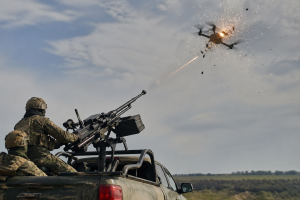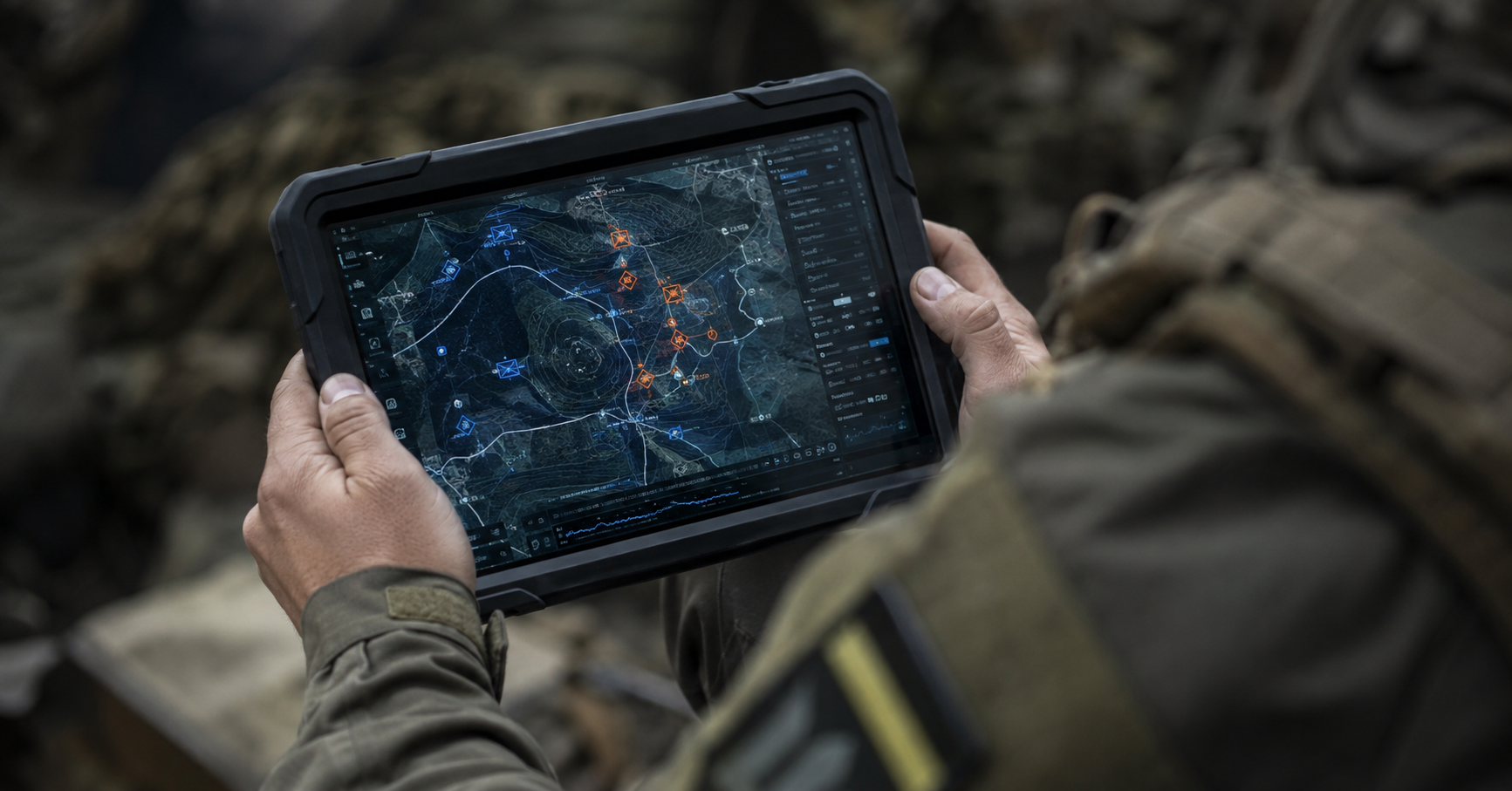
Modern warfare is no longer just a battle of people, equipment, and weapons—it is also a battle for information and the speed of decision-making. That is why, alongside multi-level reporting, paper maps, telephone communications, and radio systems, digital technologies are playing an increasingly important role. They do not replace traditional tools but complement them, helping the military analyze the battlefield faster, coordinate units, manage resources, and automate routine tasks.
Modern warfare demands a completely different pace. Commanders need to see the enemy almost in real time, know the location of their own units, and receive data from drones, satellites, radars, and intelligence sources in one place.
To meet these needs, Ukraine has developed an entire ecosystem of military digital solutions, some of which have already attracted the interest of NATO countries. Here’s a look at the software transforming Ukraine’s armed forces.
Let’s start with DELTA, a system that has become one of the key elements of digital military command and control in Ukraine. However, it is worth noting that the digital transformation of the Ukrainian military began earlier, so later we will also return to Kropyva—the software that was essentially at the forefront of digital change on the battlefield.
DELTA: How the Digital Map of Modern Warfare Was Created
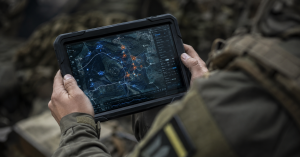
DELTA is a Ukrainian situational awareness system built in accordance with NATO standards. Its main purpose is to bring battlefield information together into a single digital environment and help commanders make decisions more quickly.
How DELTA Works and How It Was Created
Simply put, DELTA is like Google Maps for the military. But instead of showing routes, it displays:
- the locations of friendly units;
- identified enemy positions;
- vehicle movements;
- data from drones;
- satellite imagery;
- intelligence reports;
- the air situation;
- other mission-critical information.
All of this is displayed on a single digital map.
The story of DELTA began not in a government design bureau, but within the volunteer community. After Russia’s aggression against Ukraine began in 2014, members of the NGO Aerorozvidka realized that the Ukrainian military was still relying on outdated command principles inherited from the Soviet era. Information had to pass through long chains of command, wasting valuable time.
The first versions of DELTA were already being used in combat zones in 2016. Notably, the system’s architecture was designed from the very beginning in line with NATO standards, allowing it to integrate with Western military command-and-control systems.
The main idea behind DELTA is to shorten the path that information takes from the reconnaissance unit to the commander. While the Soviet model relied on a long vertical chain of communication—from lower-level units to headquarters and then back with orders—DELTA allows all authorized users to view the same up-to-date operational picture on a shared digital map at the same time.
The system operates as a secure web-based service and does not require any specialized hardware. Users simply log in through a secure connection using a laptop, tablet, or smartphone.
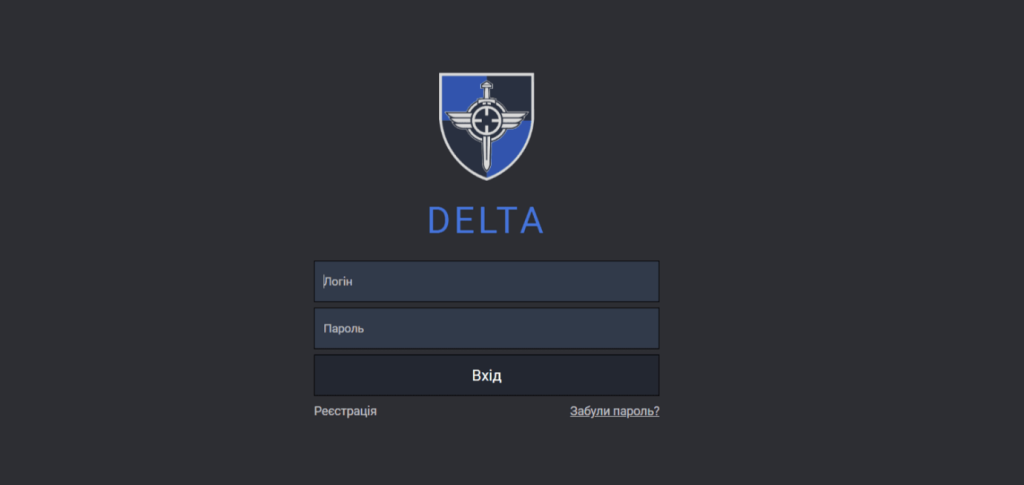
Photo: DELTA
DELTA receives information from a wide range of sources, including drones, satellite imagery, radio intelligence, sensors, and other military systems. After the launch of the eVoroh chatbot, some reports submitted by civilians also began to be used to build the operational picture after being verified.
DELTA’s Success Stories
The speed of information processing has become one of DELTA’s greatest strengths. According to the military, DELTA was used during many of the Defense Forces’ key operations, including the sinking of the Moskva cruiser and the operation to liberate Snake Island. In both cases, the system helped rapidly combine intelligence from multiple sources and provide commanders with up-to-date information for decision-making.
Following the start of Russia’s full-scale invasion, DELTA’s development accelerated significantly. The team began releasing dozens of updates, integrating new data sources, and expanding the system’s capabilities. In February 2023, Ukraine’s Cabinet of Ministers officially authorized the use of DELTA across all Defense Forces.
Over time, DELTA evolved beyond a digital map into a comprehensive ecosystem that continues to expand with new modules. In August 2025, the Ministry of Defense approved the rollout of DELTA across all levels of the Defense Forces, creating the legal framework for its full-scale implementation throughout the military.
According to then-Minister of Defense Denys Shmyhal, the system helps coordinate strikes against more than 2,000 enemy targets every day—more than half a million verified strikes over the course of a year. Just two months after DELTA was deployed across all levels of the Armed Forces of Ukraine, the system had verified more than 130,000 destroyed or damaged enemy targets, about a quarter of which were enemy personnel.
The DELTA Ecosystem
By 2026, DELTA had grown from a single application into a complete ecosystem of digital tools for battlefield management. Its publicly known modules include:
- Monitor — a digital map that combines data from multiple sources in real time and displays the operational picture across land, air, sea, and cyberspace.
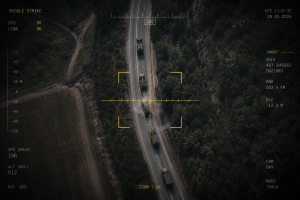
- Vezha — a secure video streaming platform for drone feeds and surveillance cameras. It allows users to watch live video, analyze footage collaboratively, and use artificial intelligence to automatically detect enemy vehicles and personnel.
- Mission Control — a drone operations management system that also includes AI algorithms trained on millions of annotated battlefield photos and videos to automatically identify targets.
- Target Hub — a fire mission planning tool. It enables users to create and assign targets to units, prioritize them, and prevent situations where multiple crews engage the same target simultaneously.
The DELTA ecosystem continues to evolve. In 2026, development continued with the launch of DELTA Mobile, a mobile application that can operate even with an unstable internet connection. One of its newest features is Radar, which provides personalized air threat alerts, displays the movement of hostile aerial targets on a map, and allows users to customize notifications.
International Interest in DELTA
Today, Ukraine’s experience is attracting growing international attention. DELTA has successfully passed interoperability testing with NATO systems, integrated with Western military platforms, and been used during multinational exercises.
In May 2026, U.S. Army Secretary Dan Driscoll told the Senate that the U.S. military does not yet have a system capable of integrating drones, sensors, intelligence, and strike assets into a single data-sharing network as effectively as DELTA. According to him, Ukraine’s experience is already being incorporated into joint exercises, while the U.S. military continues to study the approaches developed during the war in Ukraine.
The following month, the head of the Bundeswehr’s innovation unit said that Germany is exploring ways to apply Ukraine’s experience while modernizing its own digital military systems.
DELTA’s Limitations
Despite its effectiveness, DELTA is not a universal solution and has several limitations. First, its performance depends heavily on reliable communications. Although some modules, including DELTA Mobile, can operate under limited internet connectivity, the system’s greatest advantage is real-time data exchange. On the front line, this is not always possible due to electronic warfare, damaged communications infrastructure, or other combat conditions.
Another challenge is the human factor. DELTA significantly reduces the time needed to analyze information, but its effectiveness depends on users entering data accurately and promptly while following the system’s operating procedures.
Cybersecurity is another key concern. In 2022, Russian hackers carried out a phishing attack that compromised two user accounts. However, the developers emphasized that the incident did not involve a breach of DELTA’s architecture itself. Instead, the attackers gained access through a fake login website. According to the developers, the attackers never gained access to the entire system, and additional security measures and user verification procedures were introduced after the incident.
Finally, DELTA requires continuous development. Warfare is evolving rapidly, with new drones, electronic warfare systems, and AI technologies constantly emerging. As a result, the platform must be continuously updated and integrated with new data sources, making its development an ongoing process.
Kropyva: How a Volunteer-Built App Turned Ukrainian Artillery into One of the Most Accurate in the World
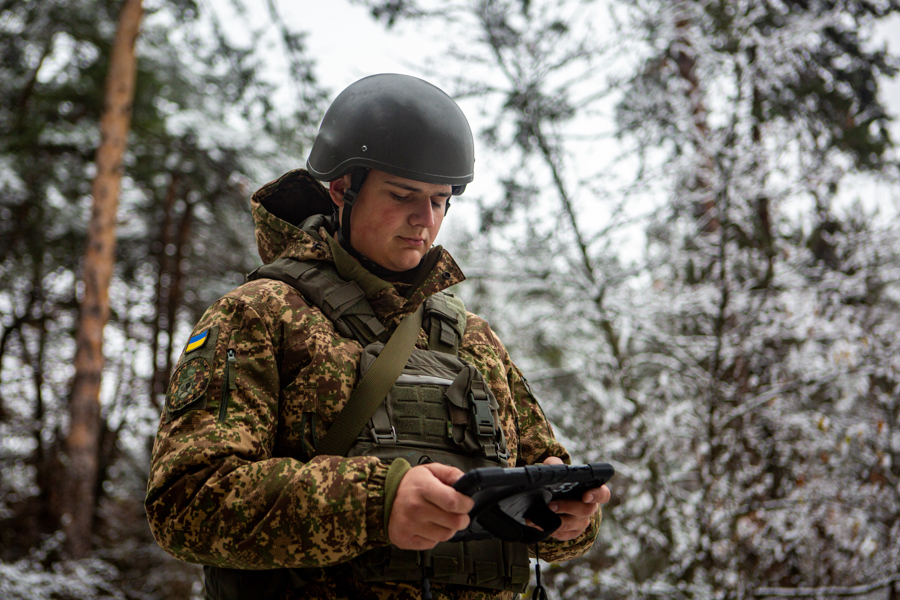
Photo: National Guard of Ukraine
While DELTA brings together battlefield data and helps commanders make decisions, the Kropyva software suite serves a different purpose—enabling artillery to operate as quickly and accurately as possible. The system allows military personnel to complete tasks in just minutes that previously required 15–20 minutes of manual calculations.
How Kropyva Was Created
Kropyva was launched in 2014 as a volunteer project by the Army SOS organization. At the time, soldiers approached volunteers with what seemed like a simple request—to provide them with modern maps, as many units were still using topographic maps printed back in the 1980s.
Initially, the volunteers simply supplied tablets loaded with up-to-date maps. However, the military soon asked for additional functionality. They needed automatic coordinate determination, distance measurement, assistance with artillery calculations, and faster information sharing between units. This led to the creation of Kropyva, which later evolved into a full-fledged tactical command-and-control system.
The software was originally developed specifically for artillery units. It automated complex ballistic calculations that had previously taken 15–20 minutes using paper maps, rulers, and calculators. Now, all that is needed is the target’s coordinates from reconnaissance or a drone operator, and the system automatically calculates the firing data required to engage the target.
Thanks to Kropyva, the time required to deploy an artillery battery was reduced fivefold, the time needed to engage an unplanned target was reduced nearly threefold, and the time required to open counter-battery fire was reduced almost tenfold compared with Soviet-era systems.
How Kropyva Works
The system works quite simply. A reconnaissance soldier or drone operator identifies target’s coordinates and sends them through Kropyva. The nearest artillery unit then receives the target data together with the firing calculations needed to open fire.
One of the best-known examples of Kropyva’s use was the operation to destroy the Russian pontoon bridge across the Siverskyi Donets River near Bilohorivka in 2022. A Valkyrie drone detected the targets and adjusted artillery fire, while Kropyva provided rapid firing calculations, enabling Ukrainian forces to destroy the crossing repeatedly.
Over time, the software’s capabilities expanded significantly. Today, Kropyva is used not only by artillery units but also by infantry, reconnaissance, and armored units. It allows users to:
- work with offline maps;
- determine coordinates;
- measure distances;
- mark targets and reference points;
- share information between units;
- plan routes;
- integrate with drones, laser rangefinders, thermal imaging devices, and radio systems.
Under NATO classification, Kropyva belongs to the Command and Control (C2) category of tactical command-and-control systems.
One of Kropyva’s key strengths is its ability to operate autonomously. The software can function without a constant internet connection, requiring network access mainly for software updates or synchronizing certain data. This makes it particularly useful on the front line, where stable communications are often unavailable.
That is why, despite the emergence of newer digital systems, Kropyva has remained highly relevant. According to its developers, as early as 2022 it was used by around 90–95% of Ukrainian artillery personnel. It later expanded to infantry, reconnaissance, and armored units, as well as the National Guard of Ukraine and the Territorial Defense Forces.
How Kropyva Differs from DELTA
Although both systems help military personnel work with digital maps and share information, they serve different purposes.
Kropyva was designed primarily as a tactical-level tool, first and foremost for artillery units. Its main advantages are rapid ballistic calculations, the ability to operate without a constant internet connection, and ease of use directly on the battlefield.
DELTA, by contrast, serves as a large-scale situational awareness system. It integrates data from a wide range of sources and helps coordinate units at the brigade, operational group, and headquarters levels.
In practice, the two systems do not compete—they complement each other. That is why military personnel often use both simultaneously: Kropyva for direct fire support operations and DELTA to maintain the overall operational picture and coordinate actions between different units.
Does Kropyva Have Any Limitations?
Despite its widespread use, the system does have certain limitations. The main one is directly related to its offline capability. If a tablet with Kropyva installed is lost or captured by the enemy, remotely disabling it is virtually impossible without an internet connection. However, the developers addressed this risk during the system’s design by adding an extra layer of security: each device stores only the information needed by a specific unit rather than the complete operational picture.
Another limitation is the system’s specialization. Kropyva performs exceptionally well at the tactical level, but it was not designed to serve as a comprehensive command-and-control system for the entire military.
For the latest updates on Ukraine’s drone industry in the second quarter, read our article here.
Impulse: The System Designed to Free the Army from Paperwork

Photo: Ministry of Defense
While DELTA and Kropyva help military personnel directly on the battlefield, the Impulse information and communication system addresses another, no less important problem—the excessive amount of paperwork within the Armed Forces. Its main task is to digitize military personnel records and simplify administrative processes that have been carried out manually for decades.
The History of Impulse and Its Purpose
The deployment of the system in the Armed Forces of Ukraine began in 2025. It was developed by specialists from the Armed Forces’ Center for Scaling Technological Solutions in cooperation with the Ministry of Defense and the Armed Forces’ Innovation Activity Directorate. A significant part of the team consists of IT specialists with civilian experience in developing digital products who are now serving in the military and have a good understanding of its needs.
Essentially, Impulse is designed to replace paper logs, numerous Excel spreadsheets, and manual document processing. Through the system, personnel departments can:
- maintain personnel records;
- record transfers, business trips, promotions, and dismissals of service members;
- automatically generate orders, certificates, reports, and other documents.
Commanders, in turn, receive up-to-date information on unit strength, staffing levels, rotations, and other data needed for planning.
One of the main advantages of Impulse is that it creates a single, reliable source of personnel data. This helps reduce the number of errors caused by manual data entry, significantly cuts the time required to prepare documents and reports, and frees service members from some of their routine administrative work.
According to the developers, Impulse is intended to become the foundation of a unified digital ecosystem for the Armed Forces. In the future, it is planned to be integrated with the Army+ app, the electronic document management system, the medical information system, and other military digital services.
Thanks to Impulse, this could eventually enable an electronic military ID, a digital leave pass, and other services that operate automatically based on a single database.
The developers also emphasize that the system meets modern cybersecurity requirements and is designed to restrict access to information according to the user’s level of authority.
How Impulse Differs from Other Military Systems
Unlike DELTA or Kropyva, Impulse is not used directly on the battlefield. Its purpose is to digitize the Armed Forces’ internal processes: personnel management, document management, order generation, and workforce administration. While combat systems help commanders make decisions faster during operations, Impulse creates a single source of reliable personnel data, without which other digital services cannot function.
What Challenges Remain
However, the developers acknowledge that scaling Impulse is significantly more complicated than launching mobile applications. Its full operation requires the necessary technical infrastructure—servers, secure networks, and computer equipment at military units. A smartphone or tablet alone is not enough.
In addition, the system is still at the stage of gradual deployment and refinement based on user feedback.
Nevertheless, Impulse is being considered as the foundation for the future of digital personnel management in the Armed Forces, with the goal of ultimately replacing paper-based document management with modern digital processes.
You can read here about how Ukrainian unmanned ground vehicles are changing modern warfare.
Palyanytsia and the SCP MFSP: Digitizing Food Supply in the Ukrainian Military
The digital transformation of the Ukrainian military is not limited to combat operations or personnel management. One less visible but critically important area is providing military personnel with food. To address this, the Armed Forces are developing a separate digital ecosystem designed to automate food inventory management, menu planning, and logistics.
The first step was the Special Computer Program for Managing Food Service Processes (SCP MFSP). At the end of 2025, it was undergoing validation in actual military units, and by February 2026, it had been officially approved for use in the Armed Forces.
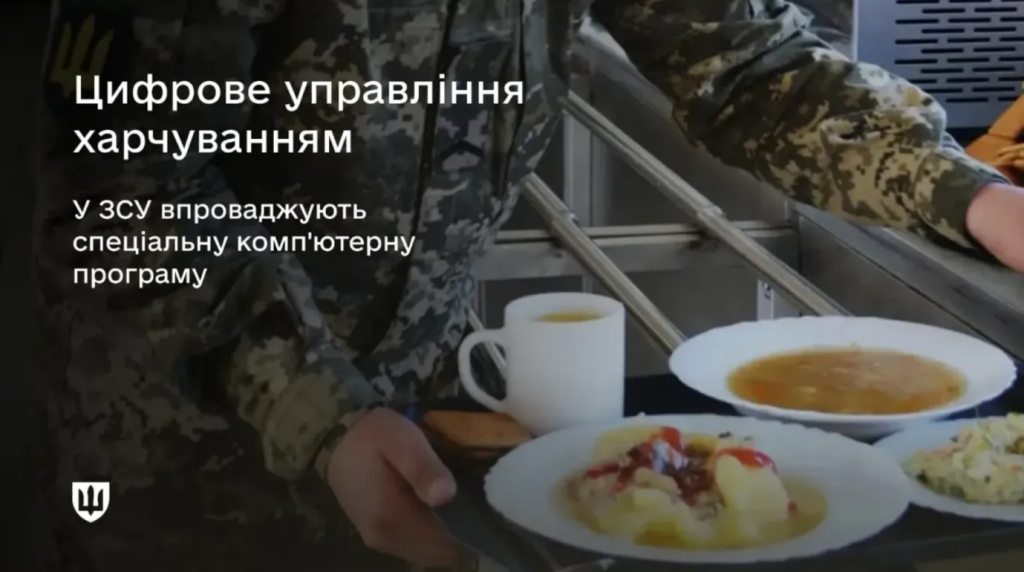
The program was developed by service members of the Armed Forces’ Center for Scaling Technological Solutions together with the Logistics Forces Command and the Ministry of Defense. It automates the day-to-day work of food service officers responsible for providing meals to military personnel.
SCP MFSP allows users to:
- maintain digital food inventories;
- prepare supply requests;
- create menu plans;
- automatically generate reports;
- monitor food consumption.
Previously, most of these processes were carried out manually or using separate spreadsheets. Now, they are brought together in a single digital environment.
According to the Ministry of Defense, this significantly reduces the time needed to prepare menus, minimizes errors associated with manual data entry, and standardizes food supply processes across different military units.
The next stage in this development was Palyanytsia, a system whose launch was announced in 2026. It does not replace the existing solutions but brings them together on a single digital platform. As explained by the Logistics Forces Command, Palyanytsia is intended to integrate the tools already in use so that food service officers can work within a single digital environment.
The system’s main goal is to reduce paperwork and automate routine processes, allowing military personnel to spend more time directly organizing food provision rather than processing documents. In the future, Palyanytsia is intended to become part of a unified digital logistics ecosystem for the Armed Forces, where data on procurement, stock levels, menus, and supplies will be interconnected.
The digitalization of food supply also has a practical impact. According to Oleksandr Khmyz, Head of the Central Department of Rear Food Supply of the Logistics Forces Command of the Armed Forces of Ukraine, new digital tools allow greater attention to be paid to the quality of military meals, including making the menu more varied on the front line.
For example, some units are already using vacuum sealers to prepare meals directly at military bases and deliver them to positions using drones.
Why This Matters
At first glance, it may seem that digital food inventory management has little to do directly with combat operations. However, the uninterrupted supply of military personnel depends on the effective operation of the support system. Automation makes it possible to prepare supply requests faster, forecast units’ needs more accurately, reduce the number of errors in documents, and free up service members’ time for their main duties.
Oberih: The Digital Foundation of Military Registration
A separate place in the digital transformation ecosystem of the defense sector is occupied by Oberih, the Unified State Register of Conscripts, Persons Liable for Military Service, and Reservists. If combat systems such as Kropyva and DELTA help military personnel carry out combat tasks directly, while Impulse digitizes personnel processes within the military, Oberih has become the foundation of digital military registration in Ukraine.
Services for persons liable for military service, including the Reserve+ app, operate on the basis of this register, while processes for citizens’ interaction with Territorial Recruitment and Social Support Centers are also gradually being digitized.
Photo: Ministry of Defense
Work on creating the register began back in 2014, following the start of Russia’s aggression, when it became clear that paper-based military registration could no longer meet modern challenges. In 2017, the Verkhovna Rada adopted the law establishing the Unified State Register of Conscripts, Persons Liable for Military Service, and Reservists, while the gradual implementation of the system continued over the following years.
After the start of the full-scale invasion, the development of Oberih accelerated significantly, and the register itself became the foundation for launching the Ministry of Defense’s digital services.
How Oberih Works
One of Oberih’s key features is its integration with other information systems. The register interacts with databases containing passport information, place of residence, education, employment, military medical examination results, disability status, veteran status, and other state registers. As a result, a significant amount of data is updated automatically, without the need to collect certificates or visit government offices in person.
Instead of paper cards, logs, and manual data entry, Oberih uses automated data exchange with other state registers. This makes it possible to update information about persons liable for military service more quickly, reduce the number of errors, and simplify access to government services.
One of the main practical results of implementing Oberih was the launch of the Reserve+ app, which uses data from this register. Through the app, citizens can:
- view their military registration status;
- generate an electronic military registration document;
- register for military service online;
- submit requests to correct certain personal data;
- apply for deferments for categories specified by law;
- receive electronic referrals for military medical examinations;
- use other digital services without visiting a Territorial Recruitment and Social Support Center in person.
Limitations of the Oberih System
The development of the system has also brought challenges. Because information was transferred from old paper archives, some users encountered inaccuracies in their records that had to be corrected through the Territorial Recruitment and Social Support Centers.
Despite this, Oberih is viewed as one of the core information platforms of Ukraine’s digital defense ecosystem. Currently, Reserve+ operates using its data, and the register is expected to be integrated with other digital solutions developed by the Ministry of Defense to create a unified information environment for military registration, mobilization processes, and the provision of digital services to persons liable for military service.
Army+: A Digital App for Military Personnel
The launch of the Army+ app became one of the most important digital transformation projects in the Ukrainian military. While Oberih serves as the core state register and Reserve+ is primarily aimed at persons liable for military service, Army+ was created specifically for military personnel.
Its main goal is to reduce paperwork and bureaucracy, simplify access to services, and move a significant share of the military’s internal processes into a digital format.
How Army+ Was Created
The idea for the app emerged in spring 2024, when the Ministry of Defense launched a large-scale digital transformation of the military sector.
Before development began, the ministry conducted a large-scale survey of more than 63,000 military personnel. They identified paper reports as the biggest problem, as these reports were often lost, took a long time to approve, or became a tool for bureaucratic pressure. That is why electronic reports became the app’s first key feature.
The development team included not only IT specialists but also military personnel with combat experience who understood the army’s real-world needs. At the same time, the developers had to adapt the regulatory framework, ensure compliance with comprehensive information security requirements, and create their own military identification system, Army ID, which does not contain sensitive data and minimizes the risk of information leaks.
The app was officially presented on August 8, 2024. Within the first few weeks:
- more than 75,000 military personnel had registered in the system;
- 264 military units had begun using electronic reports.
One of the service’s key advantages was the ability to track a report’s status in real time, while commanders were required to provide a reason for rejecting a report. This has gradually helped establish a new culture of transparent feedback within the military.
Further Development of Army+
By the end of 2024, the Ministry of Defense announced that it viewed Army+ not as a standalone service but as a future Super App for military personnel. New features therefore began to appear in the app, including:
- training courses;
- electronic surveys;
- the Pluses discount program;
- services for transferring between military units;
- tools for returning to service after unauthorized absence;
- a planned service for providing feedback on weapons and military equipment.
In 2025, Army+ received one of its biggest updates since its launch. The app introduced:
- a defender’s ID integrated into Army ID;
- the Pulse information feed with official explanations, guidance, and practical materials;
- a notification center;
- a new interface and updated navigation;
- quick access to the most popular services.
As of 2025, more than 1 million military personnel had reportedly registered in the system, while 70% of military units were already using electronic reports.
One of the most important updates in 2026 was the introduction of the electronic military registration document. The document is generated automatically based on data from digital military registers and has the same legal force as its paper counterpart. It can be used to confirm a service member’s status at military units, checkpoints, when accessing services, or when interacting with government authorities.
The launch of the electronic document also demonstrated how interconnected the Ministry of Defense’s various digital systems have become. The document is displayed only when a service member’s data has been synchronized through the Military Personnel Register and verified by the Impulse system.
You can read here about how Ukraine is scaling up interceptor drones.
From the Battlefield to the Rear: How Digital Systems Are Changing the Ukrainian Military
Over the past few years, Ukraine has effectively developed its own ecosystem of military digital solutions, with each system responsible for a specific area of work.
- DELTA provides situational awareness and coordinates units on the battlefield;
- Kropyva helps artillery and reconnaissance units detect and engage targets more quickly;
- Impulse digitizes personnel processes and document management;
- Palyanytsia, together with food supply systems, automates the work of the military’s support services;
- Oberih brought together data on conscripts, persons liable for military service, and reservists in a single system and enabled Reserve+ to operate;
- Army+ brings a significant share of internal military services to smartphones, from electronic reports to the electronic military registration document.
Despite their different purposes, all these solutions share a common goal: to reduce the time needed to complete tasks, minimize manual work, and help military personnel make decisions based on up-to-date data. This helps reduce errors, speed up decision-making, and ultimately make the military more manageable, mobile, and effective.