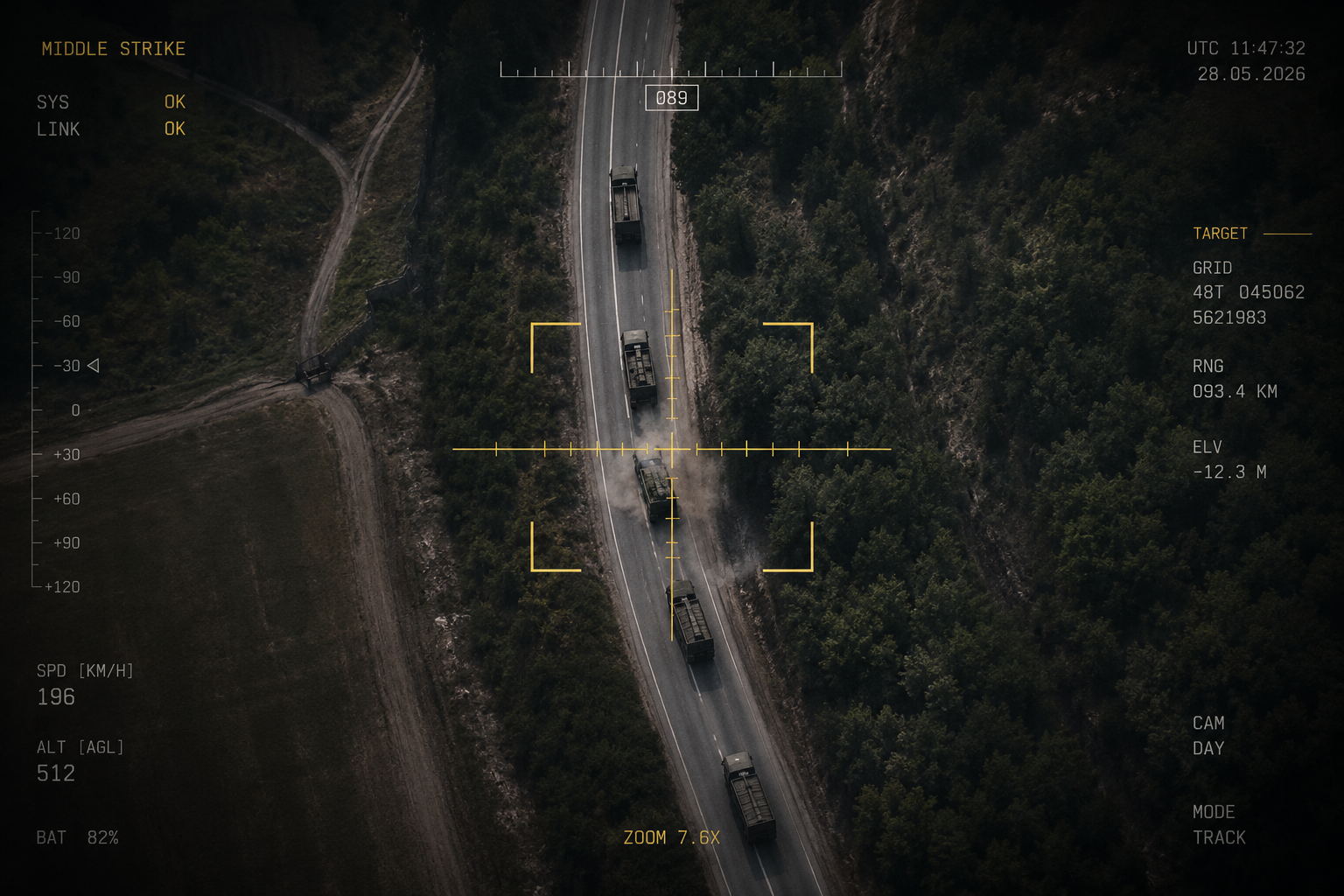
Russia’s Rear Areas Are No Longer Safe
According to Ukraine’s Ministry of Defense, since the beginning of 2026, the Defense Forces have quadrupled the number of destroyed logistics facilities, warehouses, command posts, and supply routes at operational depth. In April alone, the number of destroyed air defense systems and radars was nearly twice as high as in October of last year. Since March 1, the neutralization of 81 Russian air defense assets has been confirmed.
Mykola Kolesnyk, commander of the 422nd Separate Unmanned Systems Regiment of the Armed Forces of Ukraine, confirms that the destruction of rear-area infrastructure directly reduces the number of assaults on the front line.
“If these operations are carried out correctly, if they are properly planned and focused on key targets, the impact is felt directly on the front line. It makes things easier for the troops there because the enemy faces greater difficulties in supplying fuel, weapons, ammunition, communications equipment, and everything else required on the battlefield.
That is why we target logistics infrastructure — rolling stock in transit, locomotives, fuel depots, ammunition storage facilities. When an ammunition depot detonates, you know those munitions will never reach the front line and will never be fired in our direction,” he says.
What Is Middle Strike and How Does It Work?
To understand the concept of middle strike, it is helpful to think of modern warfare as operating on three distinct levels.
At the tactical level are FPV drones, which target enemy personnel and equipment directly along the line of contact. At the strategic level is deep strike — attacks on oil refineries, ammunition depots, and defense industry facilities located hundreds of kilometers inside Russia.
Between these two levels lies a vast operational zone extending roughly 30 to 300 kilometers from the front line, where the enemy has long concentrated a significant portion of its critical infrastructure.
Middle strike was designed to fill this gap.
Main Targets
The primary targets are those facilities without which an army cannot effectively operate:
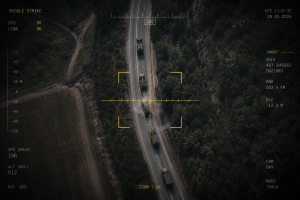
• military logistics and supply routes (road and rail hubs, ammunition, fuel, and equipment convoys)
• ammunition and weapons depots
• fuel and lubricants storage facilities (POL depots)
• headquarters and command posts
• air defense systems and radar stations
• communication nodes and electronic warfare systems
• energy infrastructure
Military officials explain that the goal is not to destroy a specific tank, but to ensure that the tank never reaches the front line at all — because there will be no fuel, no ammunition, or no commander to issue the order.
The term “middle strike” is not an official military doctrine. Like “deep strike,” it emerged within professional circles of the military, drone operators, and engineers.
Warfare is evolving so rapidly that new concepts often appear long before they are formalized in official documents. As a result, today “middle strike” refers not so much to a specific type of drone, but rather to a method of conducting operations and the nature of the targets being engaged.
Can interceptor drones help protect Ukraine’s skies from mass drone attacks? Read our blog to discover how this emerging technology works, its advantages and limitations, and the role it could play in the future of Ukrainian air defense.
The effect of middle strike is cumulative — Russia is not merely losing individual pieces of equipment, but entire elements of its command, surveillance, and air-defense systems. And the weaker its air defenses become, the greater the opportunities for further strikes, both operational and strategic.
The Difference Between Middle Strike and Deep Strike
At first glance, it may seem that long-range deep strike drones could perform the same tasks. If a drone can fly hundreds or even thousands of kilometers, why not also use it against targets at operational depth?
In reality, these two classes of unmanned systems serve different purposes and cannot fully replace one another.
The key difference between middle strike and deep strike lies in system architecture. Deep strike platforms are typically guided exclusively via GPS and follow a pre-programmed route. Middle strike systems, by contrast, maintain continuous communication with the operator, are capable of visual target acquisition in the final phase, and provide real-time strike confirmation.
The defining feature of middle strike is its ability to engage dynamic targets that can change location. While preloaded coordinates are sufficient for striking stationary infrastructure, hitting moving convoys, mobile air-defense systems, or command posts requires constant operator input and the ability to adjust the flight path in real time.
For this reason, middle strike drones are considered more technologically complex than many long-range strike UAVs. They integrate multiple navigation systems, communication channels, and target acquisition mechanisms.
To enable this, Ukrainian units often employ additional reconnaissance drones (typically “Shark” or “Leleka”) or relay platforms that maintain communication with the strike UAV over long distances.
It is precisely because of these differing mission profiles that deep strike cannot fully replace middle strike. Long-range drones are designed to systematically degrade Russia’s strategic capabilities, while middle strike is used to continuously disrupt logistics, command structures, and air defense systems closer to the front line.
Together, they form a multi-layered strike system in which each class of UAV performs its own distinct role.
From “Bulava” to “Zozulya”: How Ukraine Strikes the Russian Rear
Today, middle strike in Ukraine is not a single specific drone system, but rather an entire family of strike platforms operating at different ranges and performing different tasks.
“Bulava”: A Hunter of Air Defense and Electronic Warfare Systems
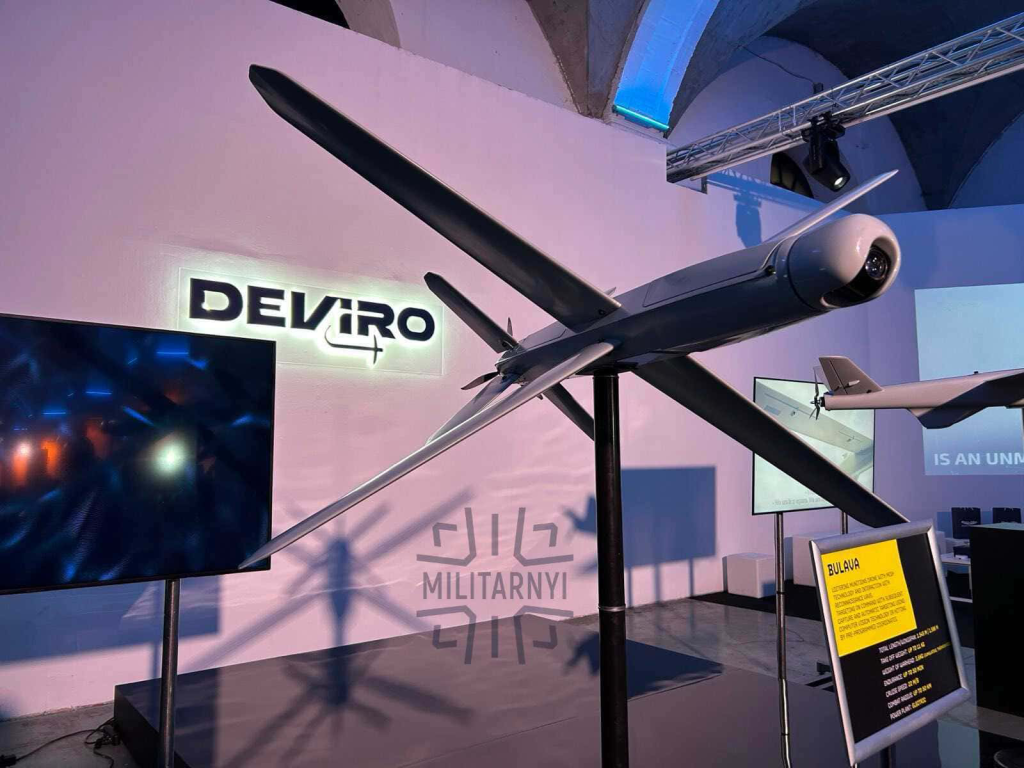
One of the best-known representatives of this class is “Bulava” strike system, developed by the company DeViRo. It belongs to the more compact category of middle strike platforms.
The drone is 1.5 meters long, has a wingspan of 1.6 meters, and a takeoff weight of 11.5 kilograms. It can remain in the air for up to 50 minutes, reaching speeds of up to 100 km/h. Its 3.6-kilogram warhead is most often configured in a shaped charge–thermobaric variant.
For operations at distances of up to 55 kilometers, a MESH network is used via a relay drone. Targeting is conducted through an optical system with both day and thermal imaging night channels. A key feature is its machine vision–based system, which allows the drone to independently lock onto and track a target designated by the operator. Its X-shaped airframe provides high maneuverability.
Thanks to the combination of precision, stable communication, and a powerful warhead, the “Bulava” is used to hunt Russian air defense systems, electronic warfare assets, armored vehicles, and other high-value targets.
A soldier known as “Serzh Marko,” whose crews tested the prototype in the spring of 2025, describes the results:
“We carried out five sorties there — five hits. A 100% hit rate. And this was on the most difficult sector.”
Confirmed targets include several Tunguska self-propelled anti-aircraft gun systems, two Buk launchers, a Buk radar station, two Tor systems, and a Strela-10 system.
RAM X: The Ukrainian Counterpart to the Lancet
Another representative of the middle strike class is the RAM X loitering munition developed by Incorporated Systems. Russian forces themselves have nicknamed it the “Ukro-Lancet” because of its similar role to the well-known Russian drone, although they note that the Ukrainian system is less detectable.
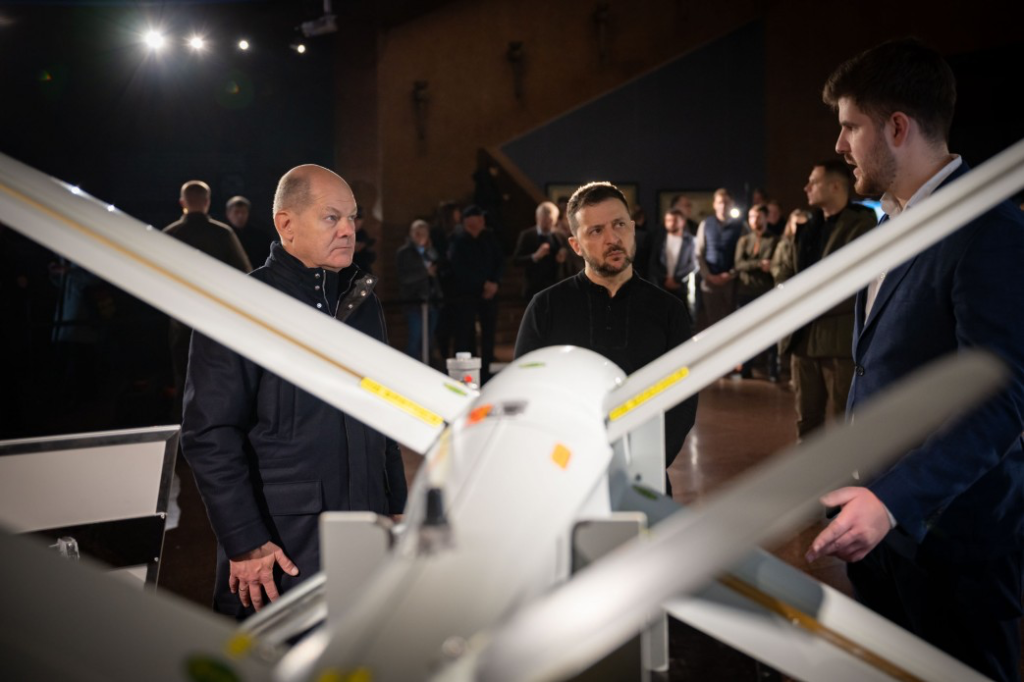
The system operates in conjunction with the Shark reconnaissance UAV, which is responsible for target acquisition and signal relay. The drone itself is based on the earlier RAM II platform, but has been upgraded with enhanced capabilities for engaging targets deep within the enemy’s defensive zone.
The exact specifications of the RAM X remain undisclosed. However, its predecessor, the RAM II, had an operational range of 30 kilometers and carried a 3-kilogram warhead. The RAM X has already been confirmed in combat operations at distances exceeding 50 kilometers.
Confirmed targets include several Tunguska self-propelled anti-aircraft gun systems, two Buk launchers, a Buk radar station, two Tor air defense systems, and a Strela-10 system.
According to forecasts, RAM X is expected to be fielded in significantly greater numbers than the Lancet is currently deployed by Russian forces.
FP-2: Built for Maximum Firepower
A distinct place within the middle strike category is occupied by the new FP-2 strike drone developed by the Ukrainian company Fire Point.
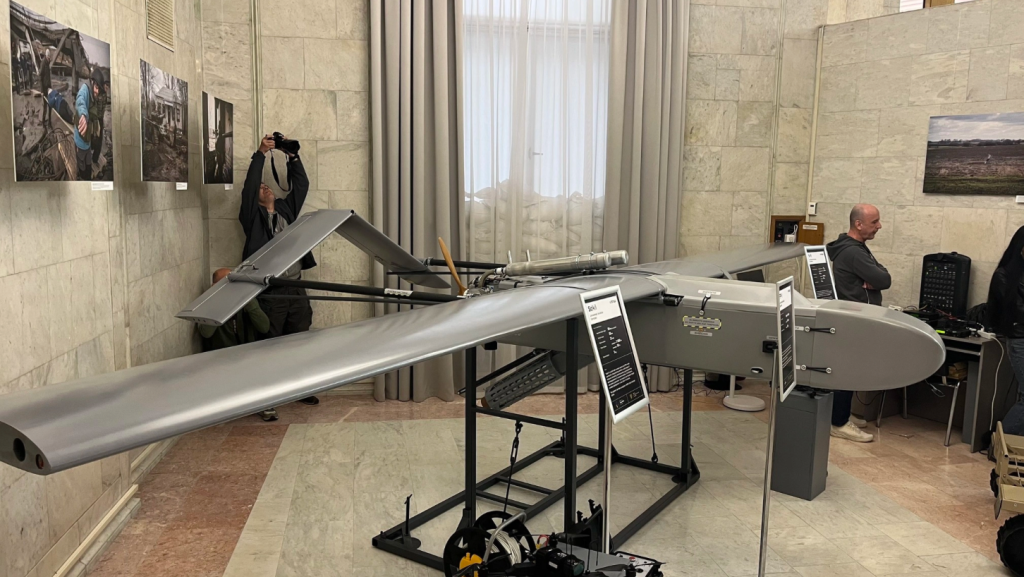
The system was developed from the long-range FP-1 platform but was specifically adapted for operations at operational depth. Structurally, the FP-2 is a shortened version of the FP-1. Its range was reduced from 1,400 kilometers to 200 kilometers, while its warhead was increased to 105 kilograms — the heaviest warhead among known Ukrainian middle strike systems.
The FP-2 can operate in two modes: autonomously using pre-programmed coordinates for strikes against stationary targets, or under operator control for engaging moving targets.
The launch system exists in both a stationary configuration and a mobile version disguised as a standard military cargo truck.
In essence, this drone demonstrates the core idea behind the middle strike concept — trading excessive range for greater destructive impact against headquarters, depots, logistical hubs, and other operational-level targets.
“Zozulya”: A Heavy Drone for Strikes on Logistics and Infrastructure
Another example is the “Zozulya” kamikaze drone developed by the company Warbirds of Ukraine.
The UAV has a wingspan of nearly 6 meters, a length of about 3.5 meters, and can carry a warhead weighing up to 50 kilograms. Its cruising speed is around 130 km/h, and its flight endurance reaches up to nine hours. Depending on the configuration, its operational range can exceed 500 kilometers, and in some versions even surpass 1,000 kilometers.
A distinctive feature of the “Zozulya” is the combination of long range with the ability to engage operational-level targets. The drone is equipped with a visual navigation system, anti-spoofing measures, and an inertial navigation system that allows it to continue its mission even in the event of GPS signal loss.
According to Mykola Kolesnyk, commander of the 422nd Regiment, the unit uses such drones not for isolated demonstrative strikes, but as a tool of systematic pressure on Russian logistics.
Among the confirmed results are strikes on electrical substations in Melitopol that supplied Russian garrisons, the destruction of the port in Berdiansk, the engagement of a “Tornado-S” multiple launch rocket system while in motion, as well as a locomotive used to transport stolen grain to Russia. The regiment has also struck energy infrastructure in Dzhankoi, Krasnoperekopsk, and Armyansk in Crimea — penetrating Crimean air defenses without losses.
The “Zozulya” has already been codified by the Ministry of Defense, with a unit cost of around $40,000.
Hornet: A Hunter of Russian Logistics
One of the most effective middle strike drones of the past year has been the American Hornet developed by Perennial Autonomy, which is actively used by Ukrainian units to strike Russian supply routes.
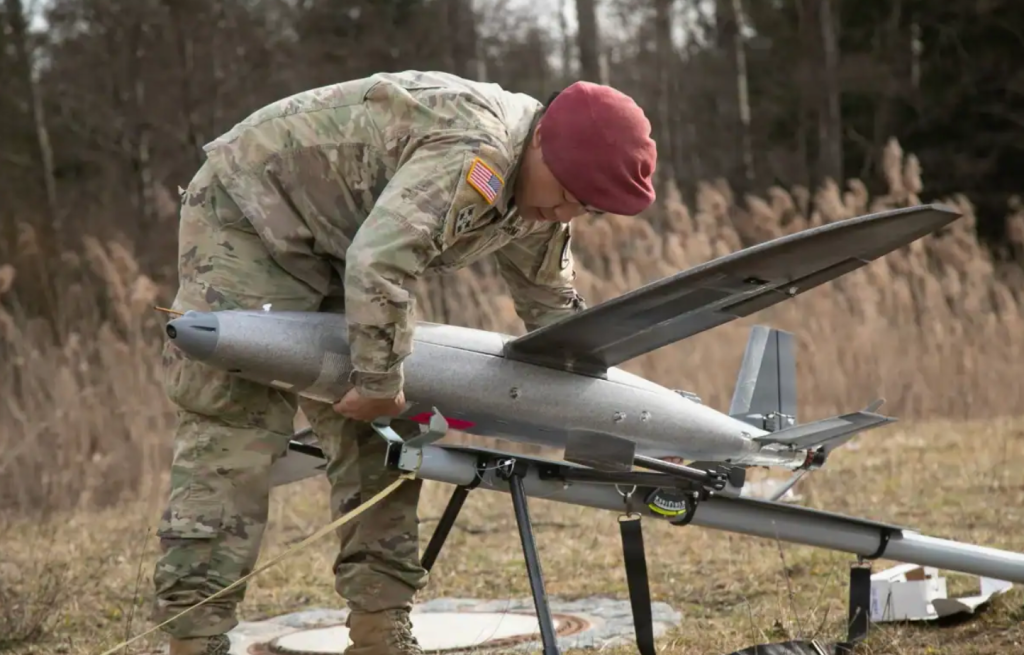
The UAV has a takeoff weight of around 15 kilograms, a wingspan of 2.2 meters, and is capable of carrying a warhead of up to 4.5 kilograms. Its flight range is estimated at 130–160 kilometers.
After detecting a target, the Hornet can automatically track it and carry out an attack during the final phase of flight. In a dive, the drone can reach speeds of up to 200 km/h.
The Hornet typically flies at low altitudes — up to 200 meters, and sometimes as low as 5 meters — striking quietly and leaving minimal reaction time. It is extremely difficult to shoot down with small arms fire. Its cost, according to military analyst Julian Röpcke of Bild, is estimated at under €5,000.
What sets the Hornet apart from many similar systems is its continuous, real-time modernization during active combat use. Its design is rapidly adjusted based on the results of each wave of sorties.
According to both Ukrainian and Russian military observers, the Hornet has recently become one of the key tools for strikes against Russian supply convoys, depots, and logistics routes in occupied parts of Donetsk and Zaporizhzhia regions, as well as along the land corridor to Crimea.
Middle Strike Is Not Just a New Type of Weapon — It Is a New Strike Economy
A single precision-guided HIMARS missile costs between $150,000 and $220,000. The “Zozulya” costs around $40,000. The Hornet is estimated at less than €5,000. Yet the objective remains the same: a destroyed radar, a burned depot, or a halted convoy are removed from the enemy’s combat cycle regardless of the means used to achieve the strike.
Ukrainian military personnel state directly that middle strike is becoming an effective alternative to expensive missile systems for engaging targets at operational depth.
This is why Ukraine is actively scaling up this capability. In April 2026, President Volodymyr Zelenskyy named middle strike one of the key priorities for the coming months. According to him, this year the number of contracted middle strike assets has already increased fivefold compared to last year, with production and deliveries continuing to expand.
The effectiveness of this approach is also reflected in operational statistics. Minister of Defense Mykhailo Fedorov reported that in April, the number of successful engagements carried out by medium-range drones doubled compared to March and increased fourfold compared to February.
What Q1 2026 Reveals About Ukraine’s Drone Ecosystem? Read more about the key industry news.
Gradually, the development of this segment is reaching the international level. Ukraine is launching joint production of middle strike drones with Norway and expanding cooperation with European countries within the “Build with Ukraine” initiative. This involves not only financing production, but also developing new unmanned systems using advanced communication technologies, autonomous targeting, and elements of artificial intelligence.
In essence, middle strike is becoming a tool that shifts the war from the front line into the enemy’s rear. And while FPV drones are reshaping the tactical level of combat and deep strike systems are affecting Russia’s strategic capabilities, it is increasingly middle strike that determines how effectively the Russian army can fight here and now.