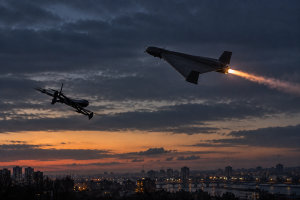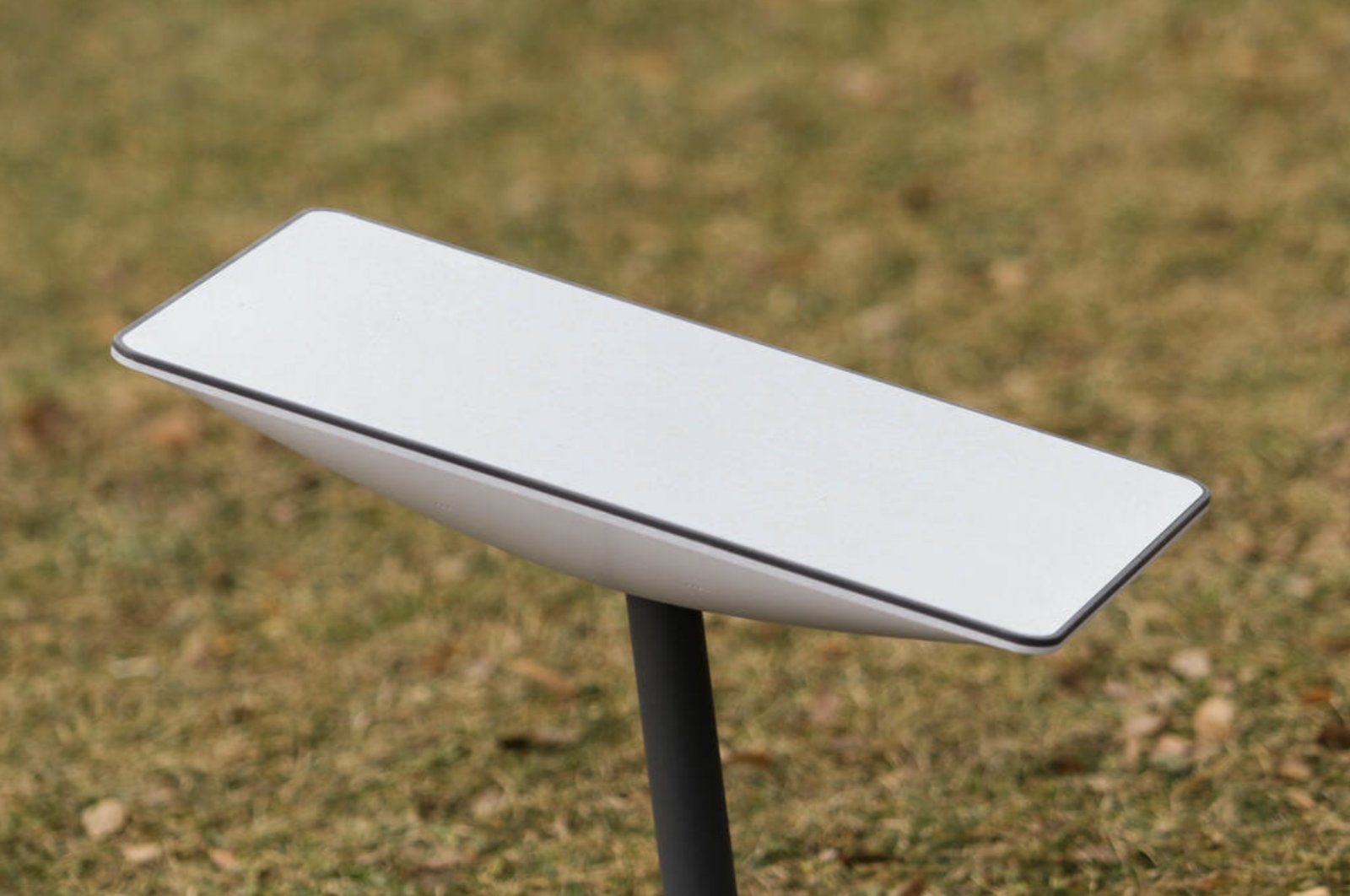
Russia is increasingly attacking Ukrainian cities with jet-powered Shaheds. To intercept them, Ukraine needs high-speed drones — and those depend on SpaceX’s Starshield satellite network. In autumn 2026, the United States imposed an artificial speed cap: drones flying faster than 160 km/h began losing their connection to the system’s terminals.
What Starshield is, how it differs from Starlink, who controls SpaceX’s military network, and how the restrictions on satellite communications are affecting Ukraine’s armed forces — we explain below.
Contents
How Starshield differs from Starlink
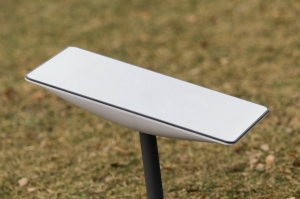
Starlink is SpaceX’s commercial satellite internet system, serving private users, businesses, and government institutions. Starshield, by contrast, is a separate SpaceX program built for government and military customers, particularly in the national security sector.
SpaceX unveiled Starshield in December 2022. The program covers three main areas: Earth observation, secure satellite communications, and hosting specialized payloads on spacecraft.
Despite their shared technology, the two systems differ in several important ways:
- Purpose. Starlink provides internet access, while Starshield is designed for military and government tasks, including reconnaissance, secure communications, and data transmission.
- Hardware. Starshield builds on Starlink technology but adds secured hardware and software components for handling classified information.
- Access. Starlink can be bought as a commercial service, whereas Starshield operates only under government and military contracts.
- Control. SpaceX sets the terms of use for Starlink. Starshield works for the U.S. government: the state is the customer and sometimes the owner of the satellites, while SpaceX builds them and, in some cases, operates them as a contractor. How control is divided between the Pentagon and the company has not been made public.
- Speed of movement. Since March 2026, standard Starlink mobile plans have had a global speed cap of 100 mph — roughly 160 km/h. Higher speeds require special aviation plans. That is why Ukrainian forces use Starshield for high-speed drones: before the October restrictions, its terminals held a connection at more than 400 km/h.
- Network interoperability. Starshield satellites are physically separate from Starlink but can use the commercial network’s infrastructure when needed. According to astropolitics researcher Bleddyn Bowen, this capability is reserved for U.S. national security users.
SpaceX has received multi-year, multibillion-dollar contracts from the U.S. military for Starshield-related services. At the same time, much of the information about the system’s architecture, funding, and individual launches remains classified.
For Ukraine, the difference between the two systems comes down to two things: the speed at which the connection holds, and who has the authority to limit it.
| Parameter | Starlink | Starshield |
|---|---|---|
| Customers | Private users, businesses, governments in more than 160 countries | U.S. national security agencies (Pentagon, NRO, Space Force) and their partners |
| Who regulates use | SpaceX (terms of service) | U.S. government; how control is shared with SpaceX is not public |
| Satellite constellation | Over 11,000 satellites, ~550 km | Separate, on the same platforms with extra equipment; size is classified |
| Level of protection | Standard commercial | Encryption, secured hardware and software |
| Main tasks | Internet access | Communications, reconnaissance, surveillance, relaying missile-defense data |
| Combat use | Offensive operations prohibited, according to Musk | Permitted; decided by the U.S. government |
| Speed limit | ~160 km/h on standard plans | Normally much higher (over 400 km/h, according to Ukraine’s Defense Ministry) |
Read also: Can Interceptor Drones Protect Ukraine’s Skies?
Timeline of Starshield restrictions in Ukraine
On October 14, 2026, the Ukrainian military first reported problems with Starshield terminals in motion. The connection began dropping once drones exceeded 160 km/h (100 mph), which caused a number of combat missions to fail.
Serhii “Flash” Beskrestnov, an adviser to Ukraine’s President, later clarified that the restrictions applied specifically to the military Starshield service package. According to him, Ukraine’s Defense Forces received no warning of the change. Ordinary stationary satellite terminals kept working.
On October 24, the restrictions were reported lifted. Ukraine’s Defense Minister Yevhenii Khmara said the ministry’s monitoring systems had recorded Starlink and Starshield operating normally again. The terminals once more provided a stable connection at speeds above 400 km/h. The ministry attributed this to direct dialogue and negotiations at the highest level.
On November 12, 2026, Volodymyr Zelensky reported a new wave of Starshield restrictions. According to him, Ukrainian forces had recorded a speed cap of 161 km/h for several days. These were not isolated technical glitches: units tested the system in different sectors of the front and received daily confirmation of the limits.
The cap applied over the temporarily occupied territories, while the system worked without it over Ukrainian-controlled territory. The President called the decision dangerous, since it is precisely over those areas that Ukrainian forces try to intercept Russian jet-powered drones before they reach Ukrainian cities.
On November 17, Defense Minister Yevhenii Khmara confirmed that Ukraine was working with the U.S. side to resolve the problem. On November 20, Zelensky said Starshield service had been restored after talks with U.S. Secretary of State Marco Rubio.
How Starshield restrictions affect the front
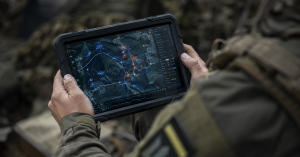
The restrictions pose the greatest threat to Ukrainian interceptor drones that counter Russia’s jet-powered drones. To catch such a target, interceptors need to reach speeds of 350+ km/h. If a terminal loses its link to the operator at 160 km/h, the military cannot fully control the drone during its mission.
The problem is most critical over the temporarily occupied territories. Ukrainian units try to shoot down Russian jet-powered Shaheds while they are still over occupied land, before they reach Ukrainian-controlled areas. If a drone cannot be destroyed at that stage, it has to be intercepted closer to Ukrainian cities and critical infrastructure. That cuts reaction time and puts additional strain on the air defense system.
On November 15, Volodymyr Zelensky said that because the restrictions remained in place, Russian drones were able to strike energy infrastructure.
The problem is not limited to countering air attacks. During the first restrictions in October, the military and experts also warned of the consequences for deep strike and middle strike operations against Russian military targets.
The American outlet Axios also reported on the scale of the problem, citing an anonymous Ukrainian official. According to the official, the share of failed drone missions due to the restrictions grew over three days: from 10% on the first day to 50% on the second and 100% on the third. SpaceX, however, denied any changes to the system, telling Axios: “This is false. There have been no changes.”
Read also: Beyond the Military: The Rise of Private Air Defense in Ukraine
Who decided to restrict Starshield
As of November 22, there is no official confirmation of who imposed the Starshield speed cap in Ukraine. Reuters, citing U.S. officials, reported that the order came from the White House. The Wall Street Journal, citing its own sources, wrote that Elon Musk made the decision personally.
After the restrictions were reimposed in November, the Financial Times, citing senior Ukrainian officials, suggested that the U.S. may have used them as leverage over Kyiv during negotiations with Russia in Abu Dhabi. There is no official confirmation of this version.
The situation also drew a reaction in the U.S. Congress. More than 100 lawmakers from both parties called on the Trump administration and SpaceX to explain the reasons for the restrictions and restore full service.
On November 18, Elon Musk stated that Starshield is a system separate from Starlink and controlled by the U.S. government, and denied Zelensky’s claims of disruptions. Meanwhile, on November 20, Democratic Congressman Jim Himes threatened to push for limits on federal funding for SpaceX if it remains unclear who made the decisions about Starshield’s operation in Ukraine.
Read also: The Evolution of Shaheds: How Russia Scaled Its Drone Warfare
Starlink and Starshield: key facts
Not a quick replacement. The closest analogue is OneWeb from Europe’s Eutelsat, but for direct use on the front line it still falls short of Starlink. Europe’s IRIS² system will begin providing some services no earlier than 2029. Ukraine is also exploring building its own network together with ICEYE and Nokia.
In late January 2026, at the request of Ukraine’s Defense Ministry, SpaceX disabled all terminals in Ukraine that were not on the “whitelist.” At the same time, the company introduced a 75–90 km/h speed cap so that Russians could not control strike drones via Starlink. Starlink and Starshield are blocked on Russian territory.
Yes. In autumn 2022, Musk ordered Starlink switched off over part of the Kherson region during a Ukrainian counteroffensive, fearing a Russian nuclear response. At least a hundred terminals lost their connection.